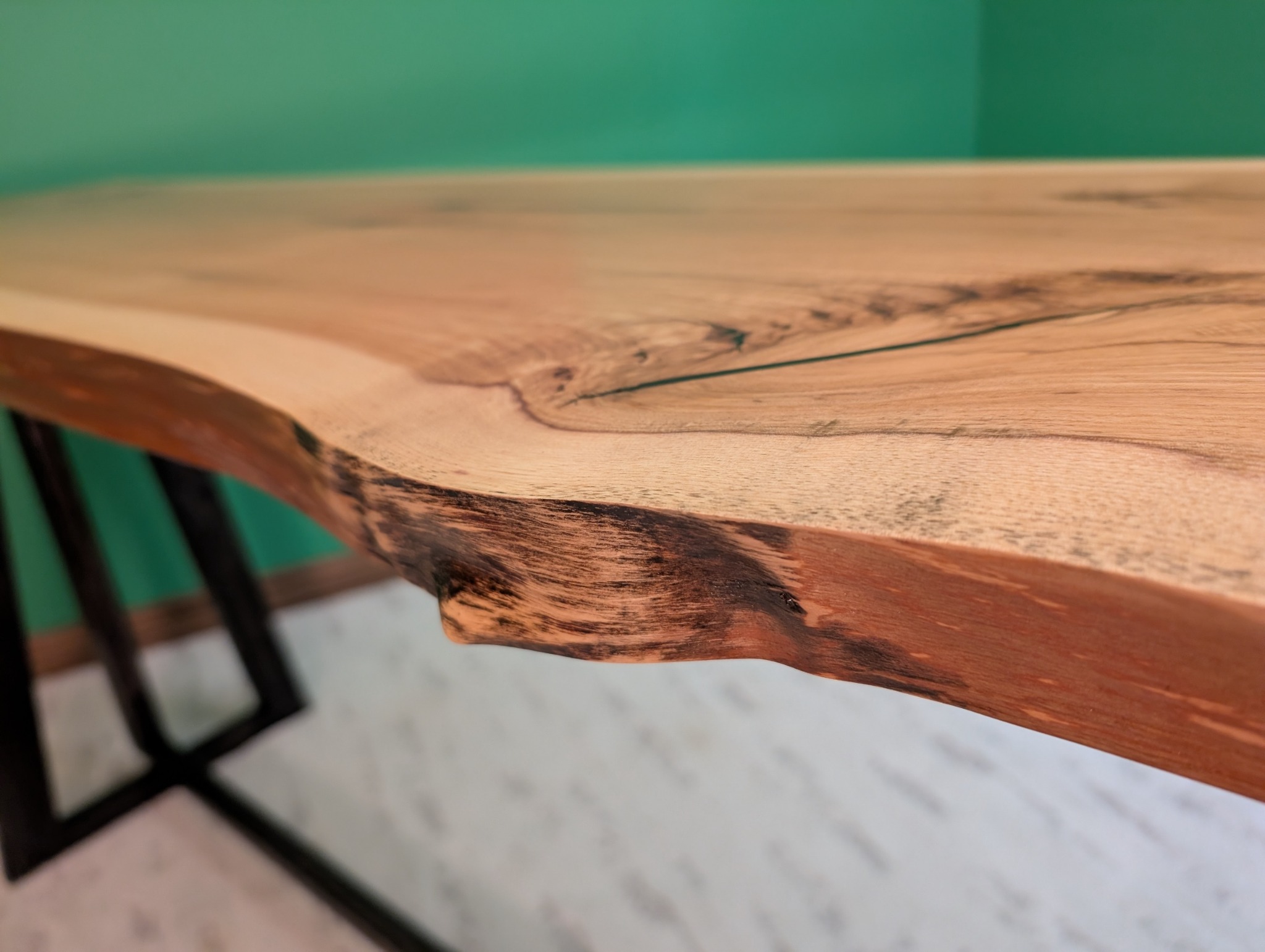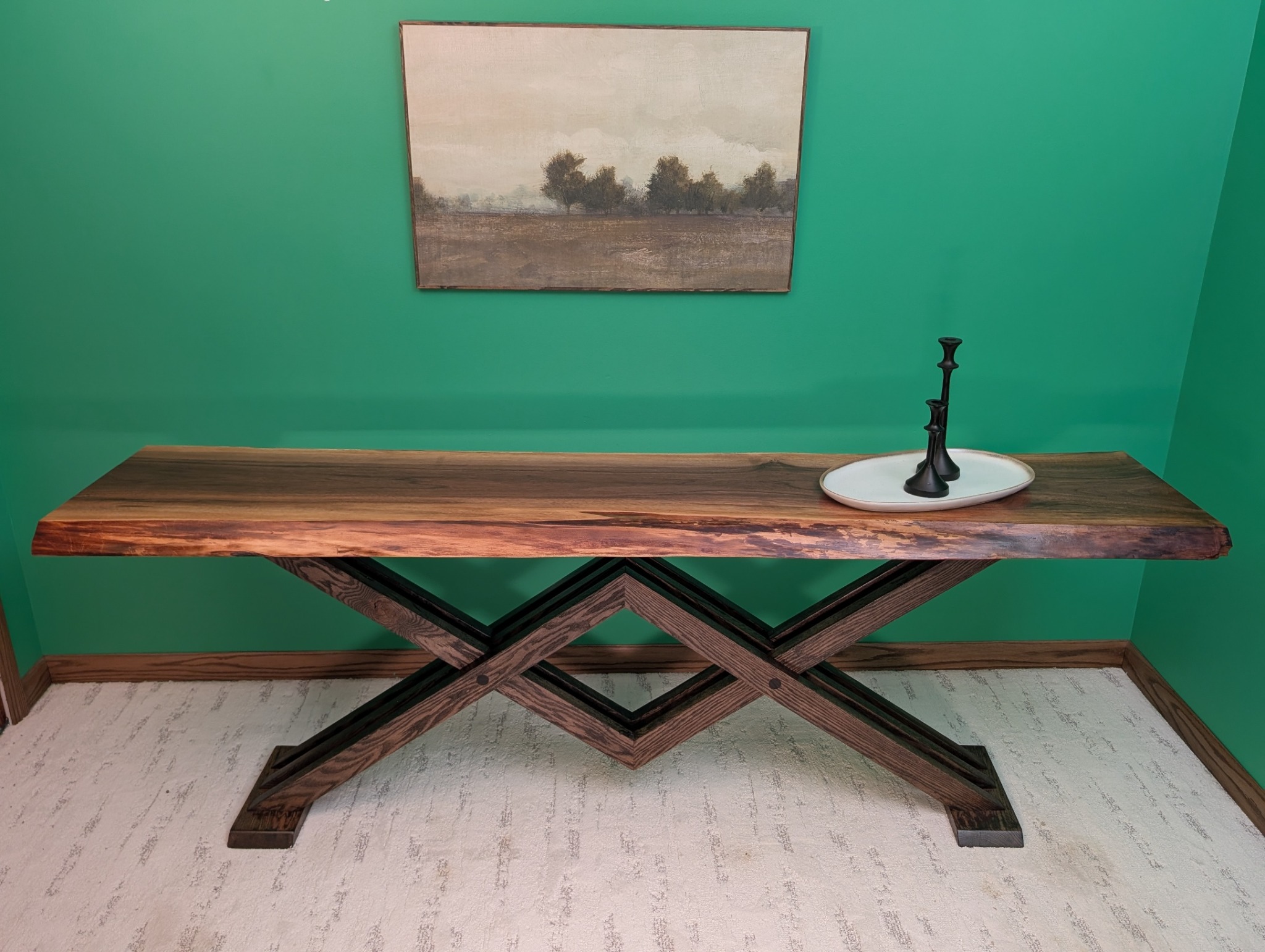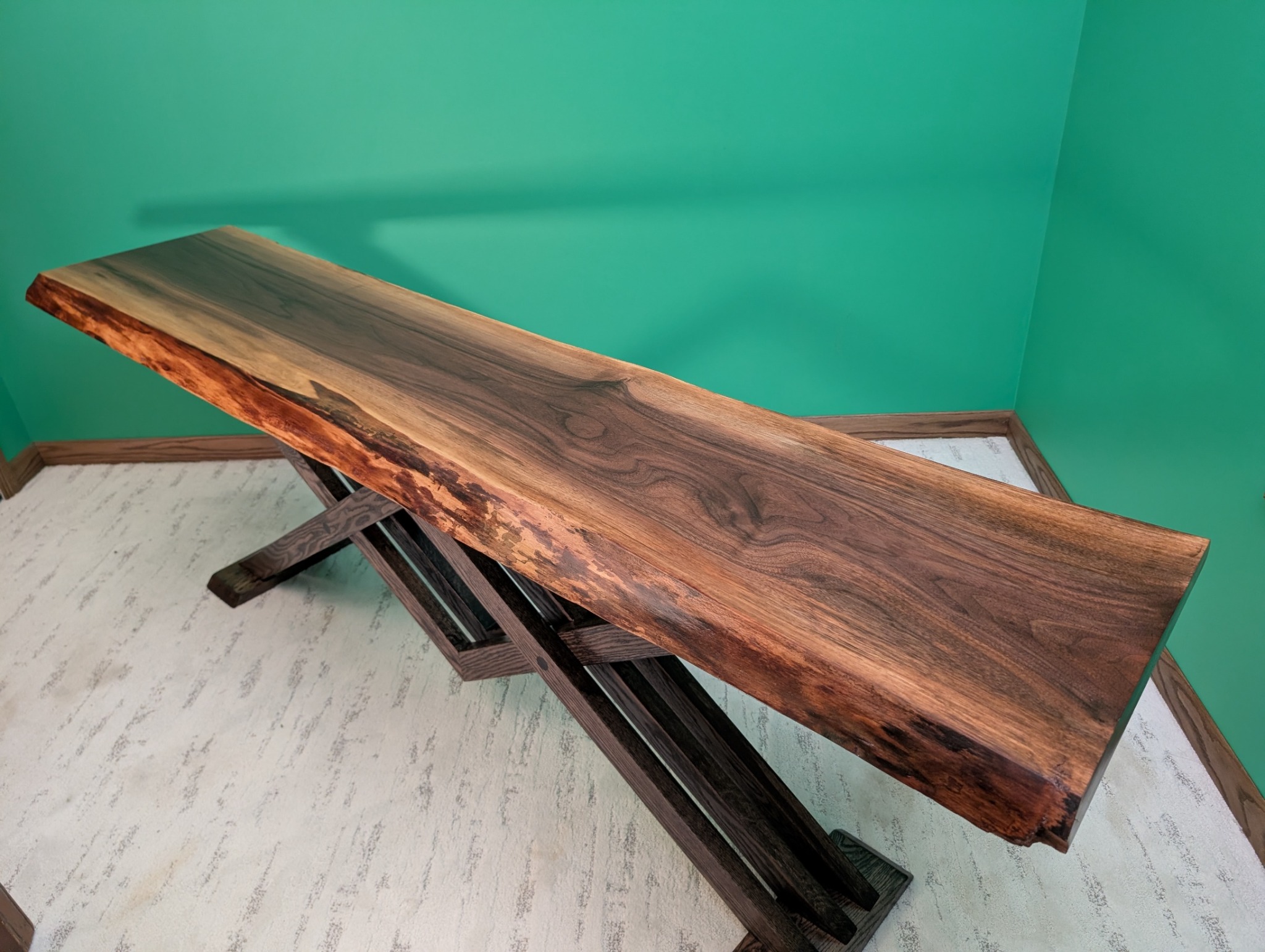
The statement is not, “Look how much of nature I can sand away.”
Newest piece · Available by inquiry

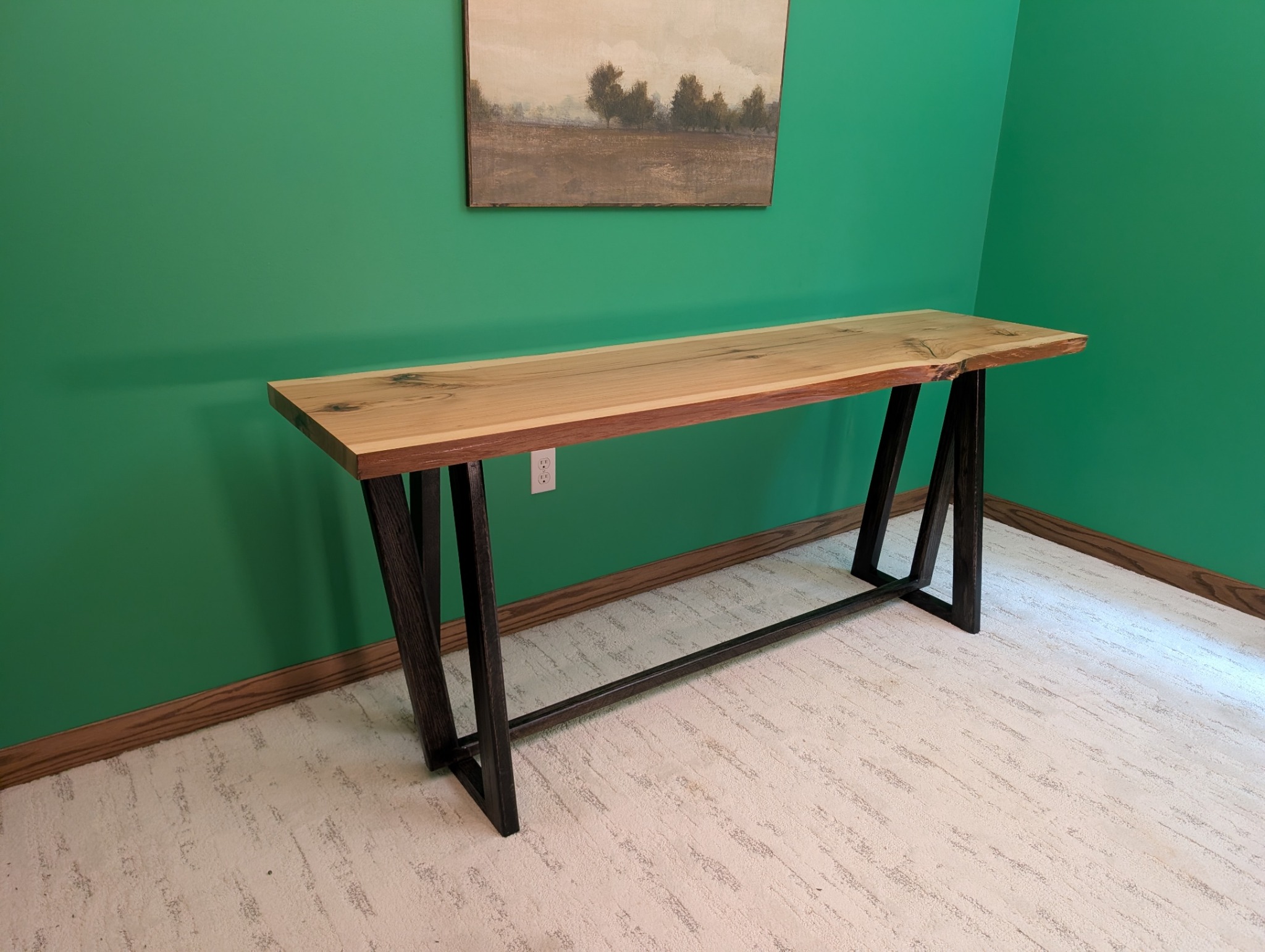
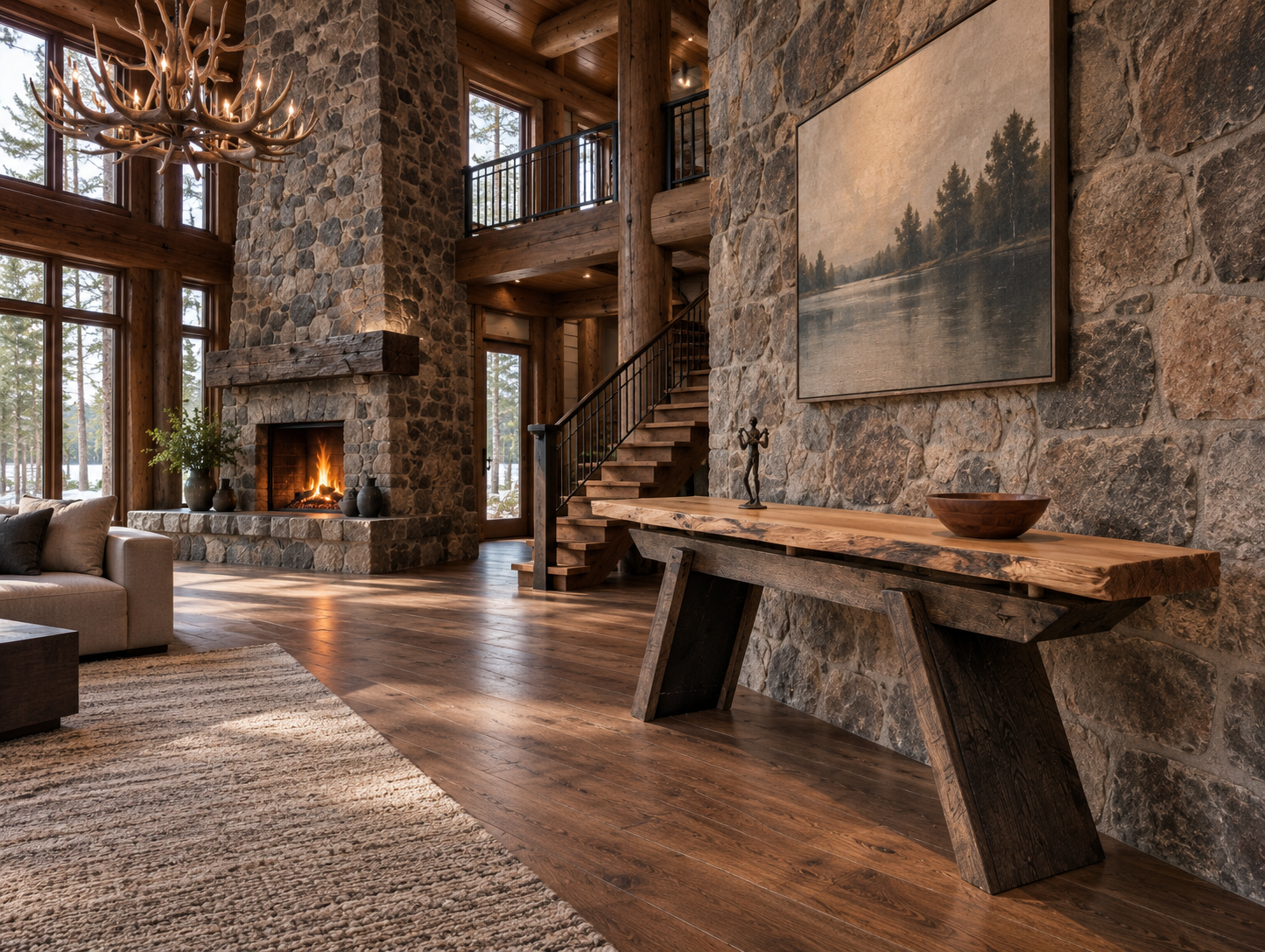
The Gathering Table

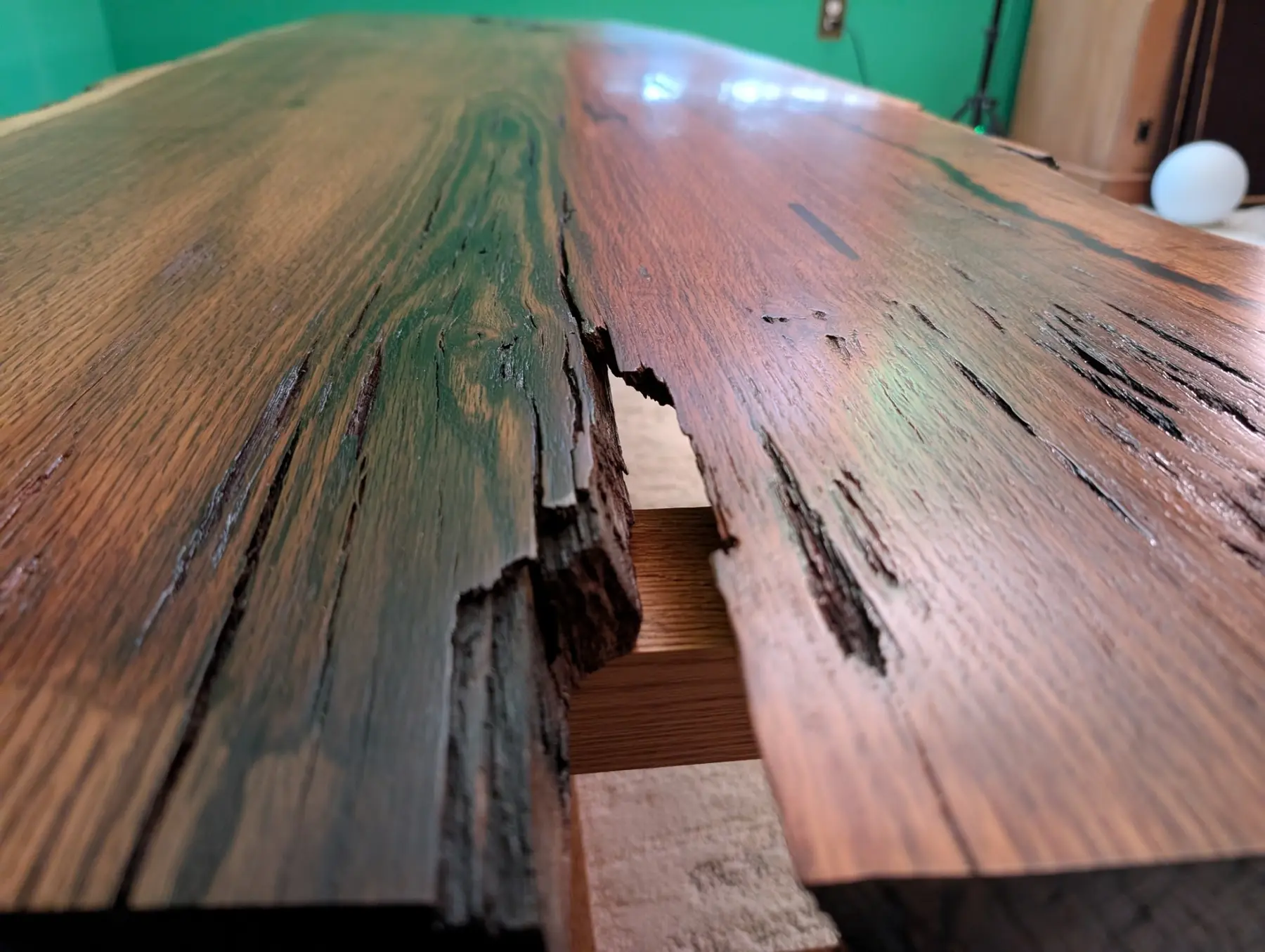
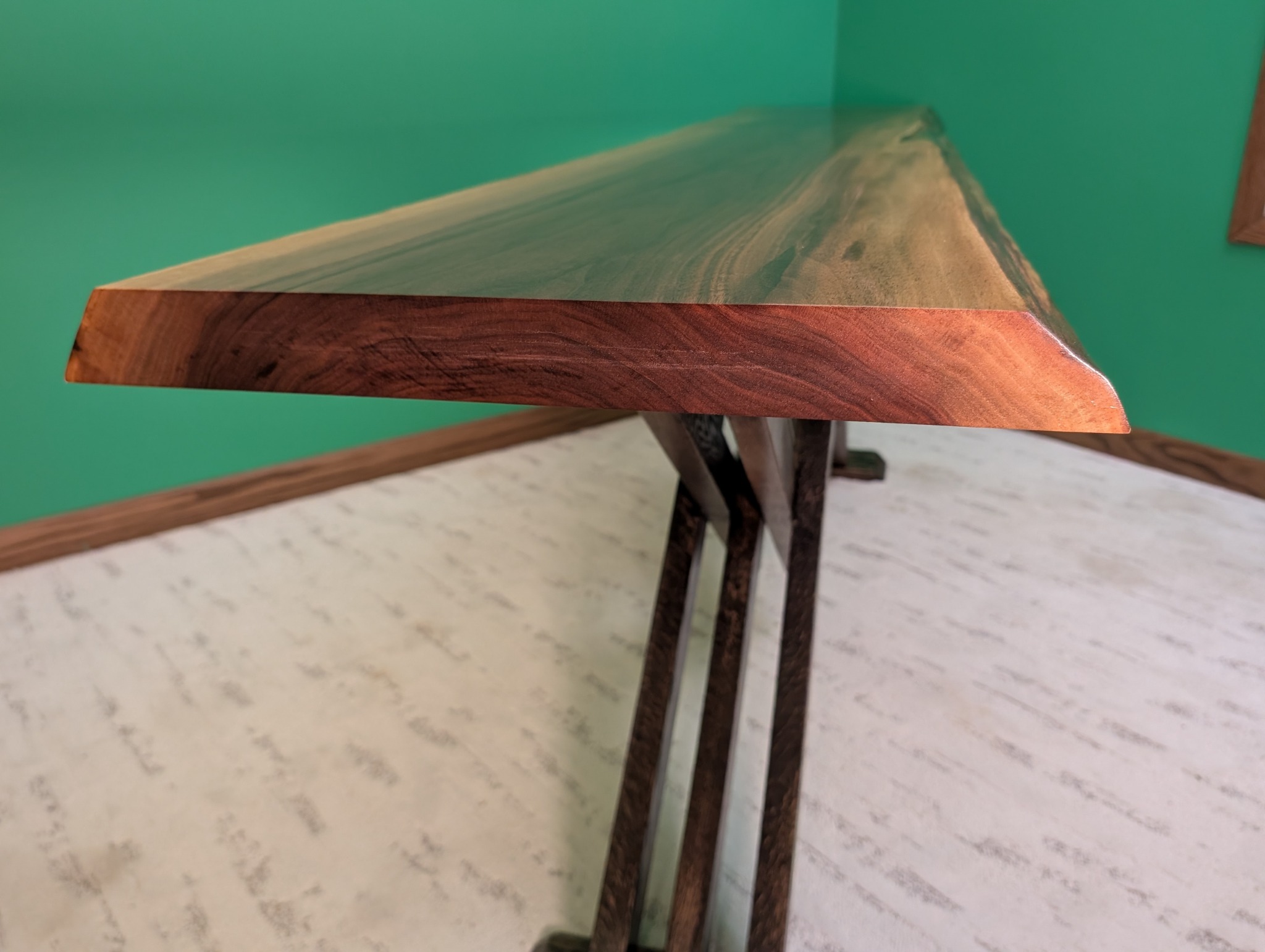
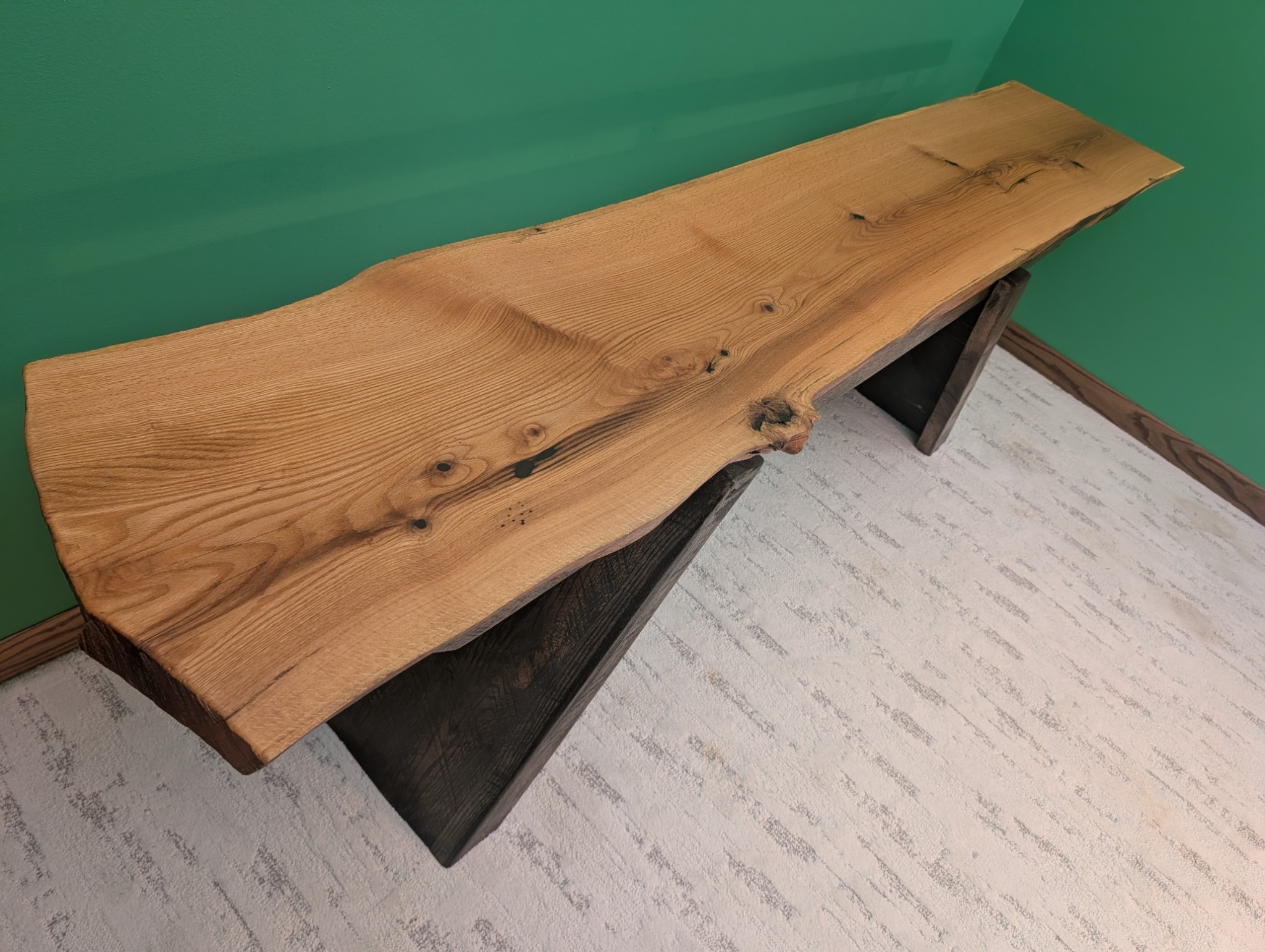
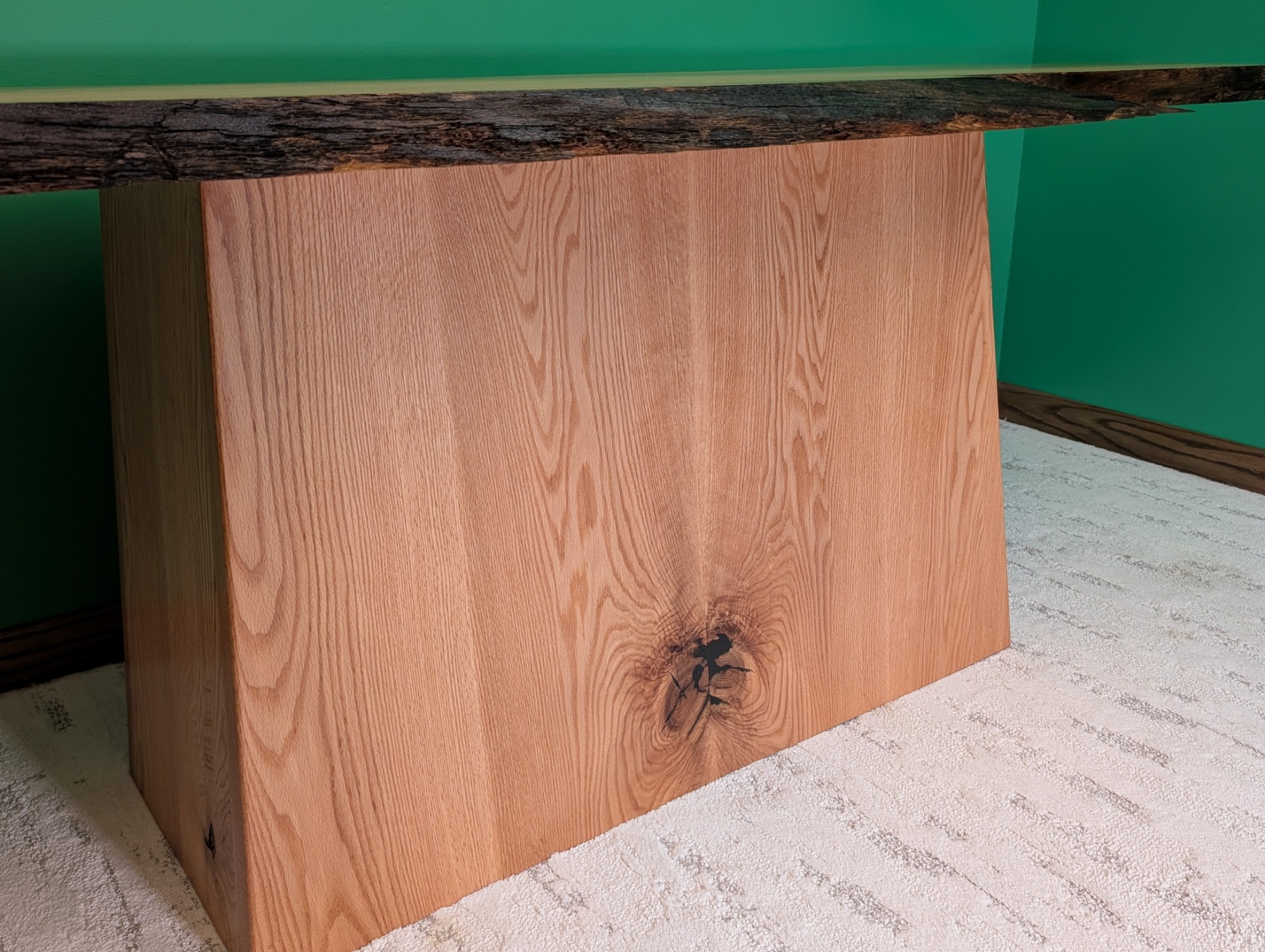
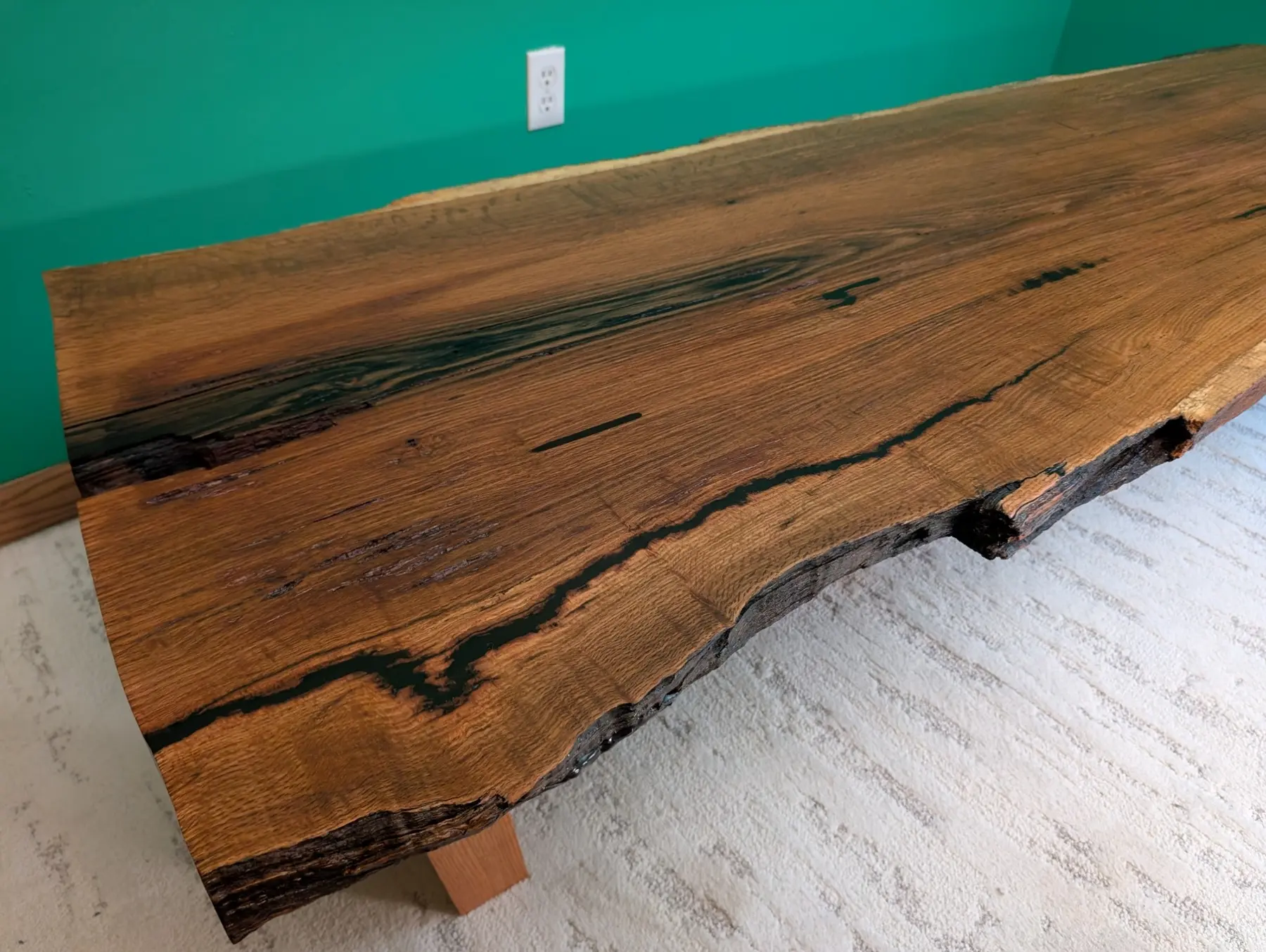
Ninety inches of oak that had exhausted all of the obvious answers.

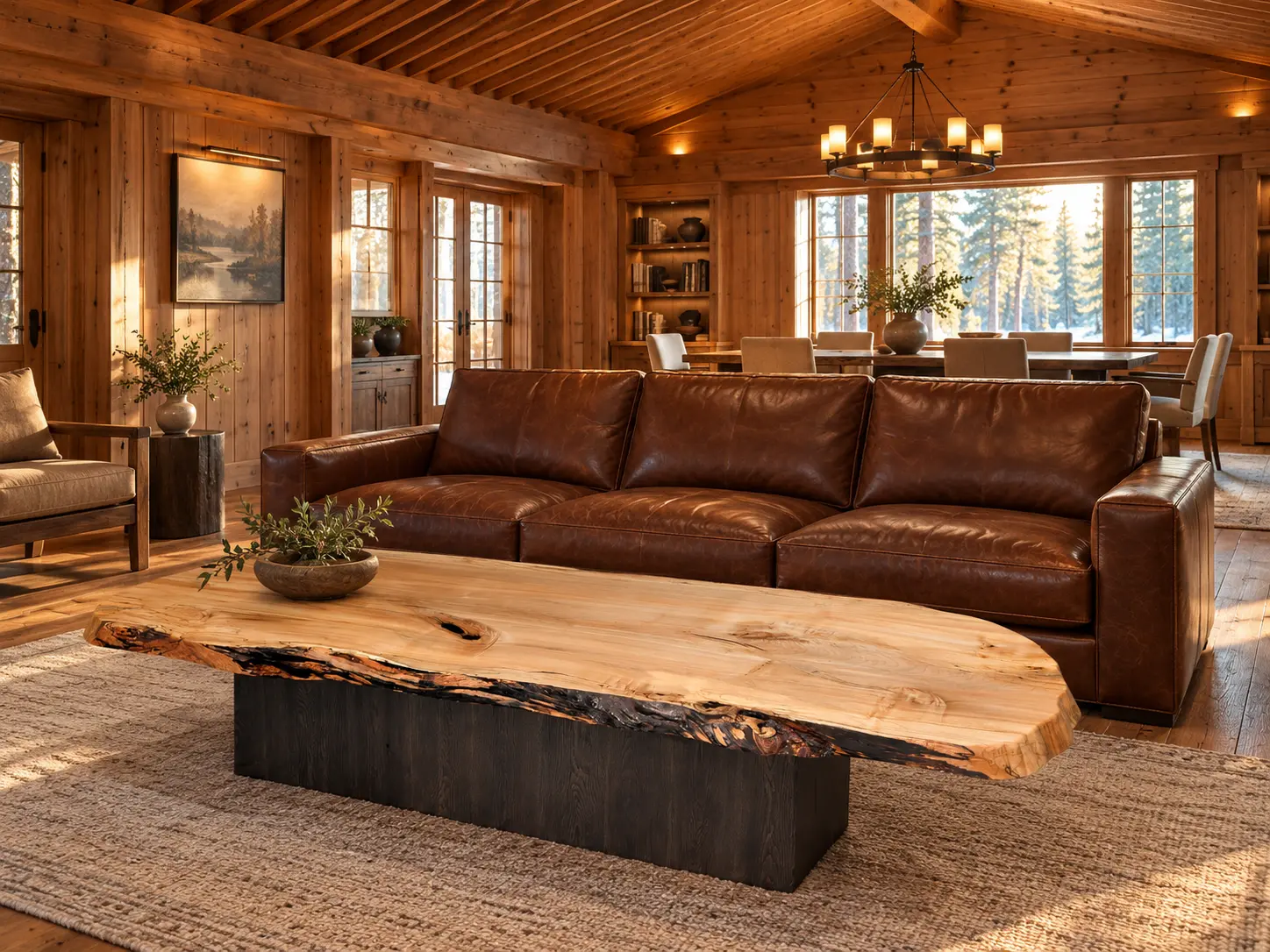
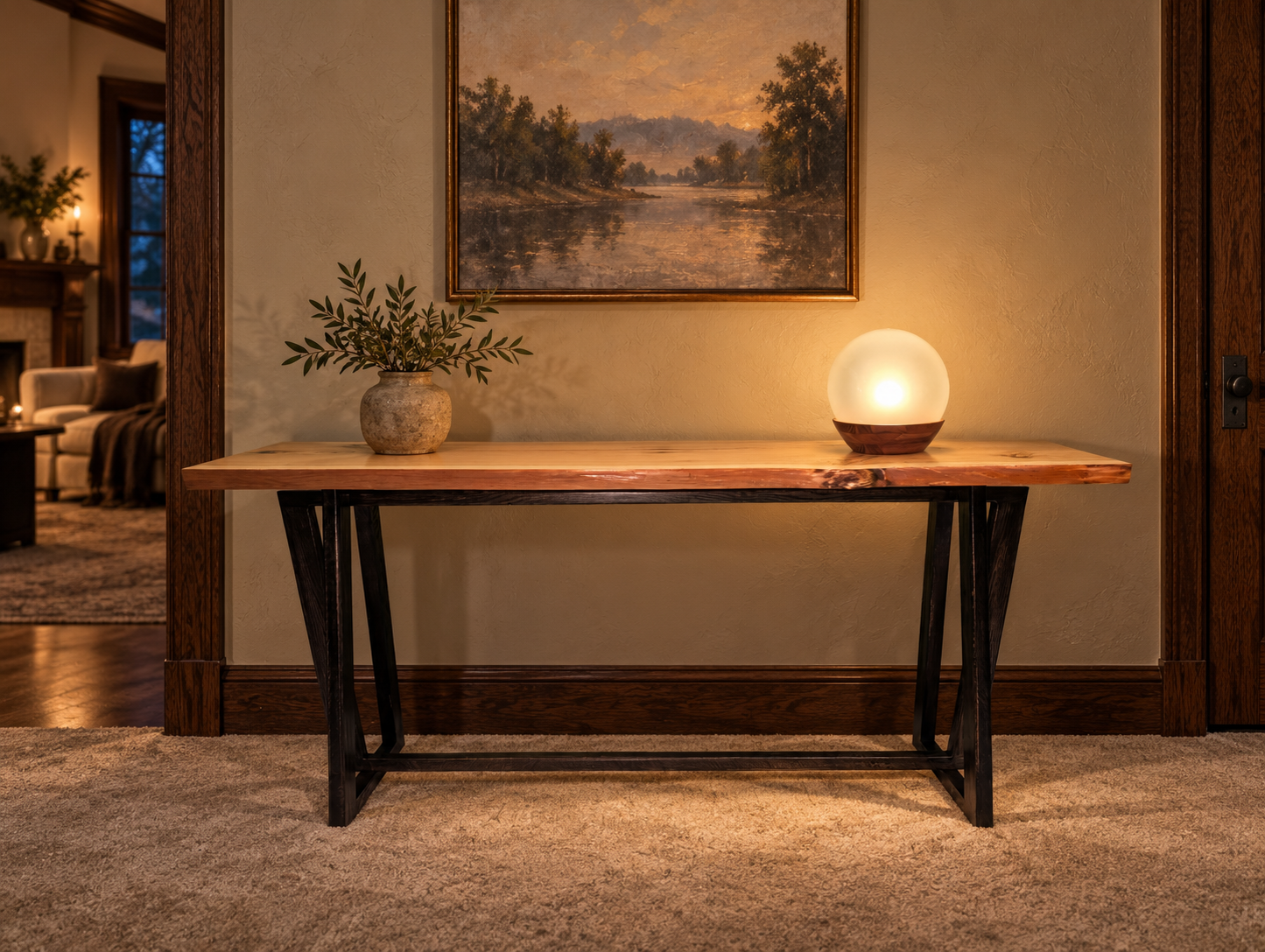
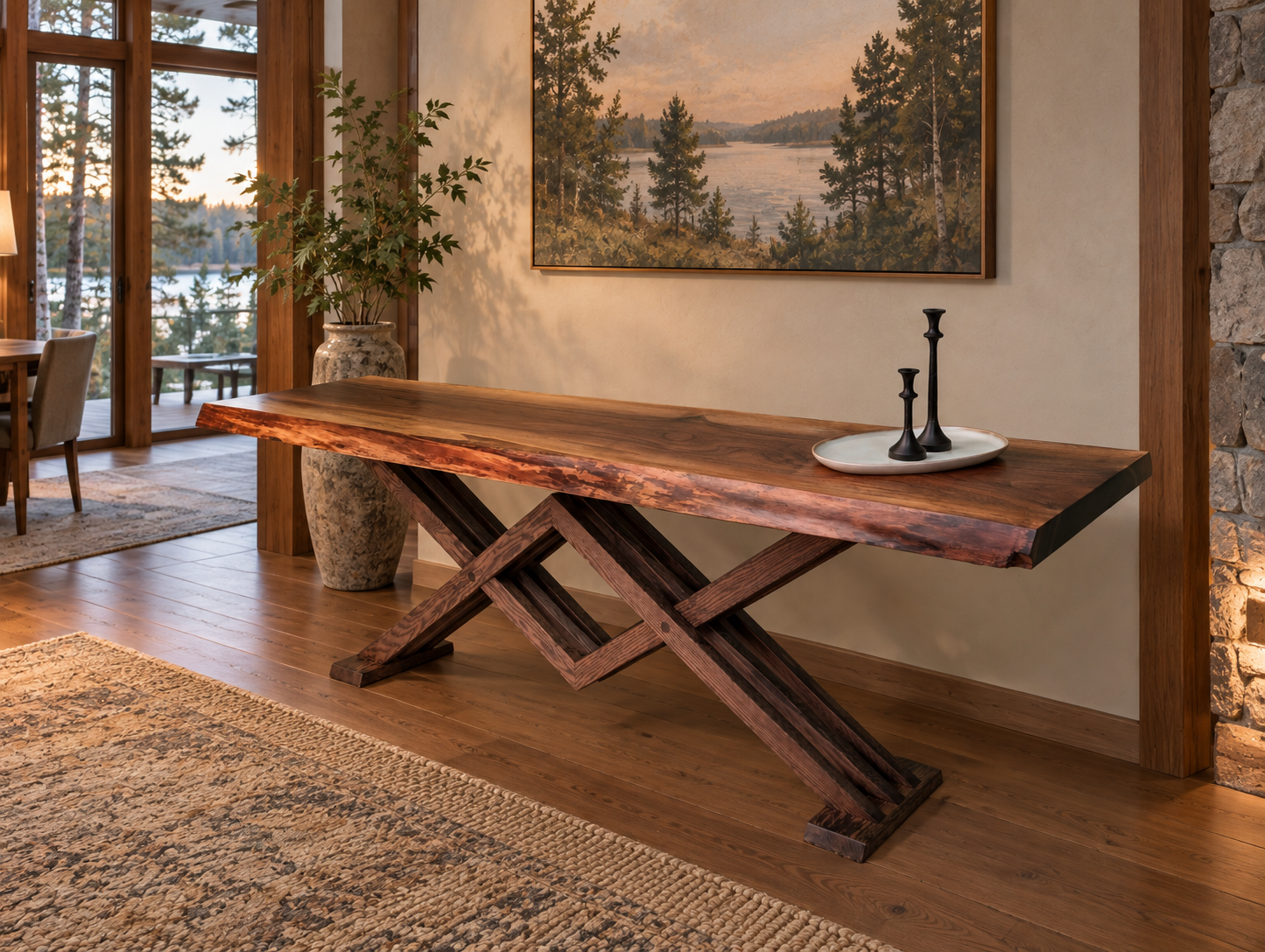
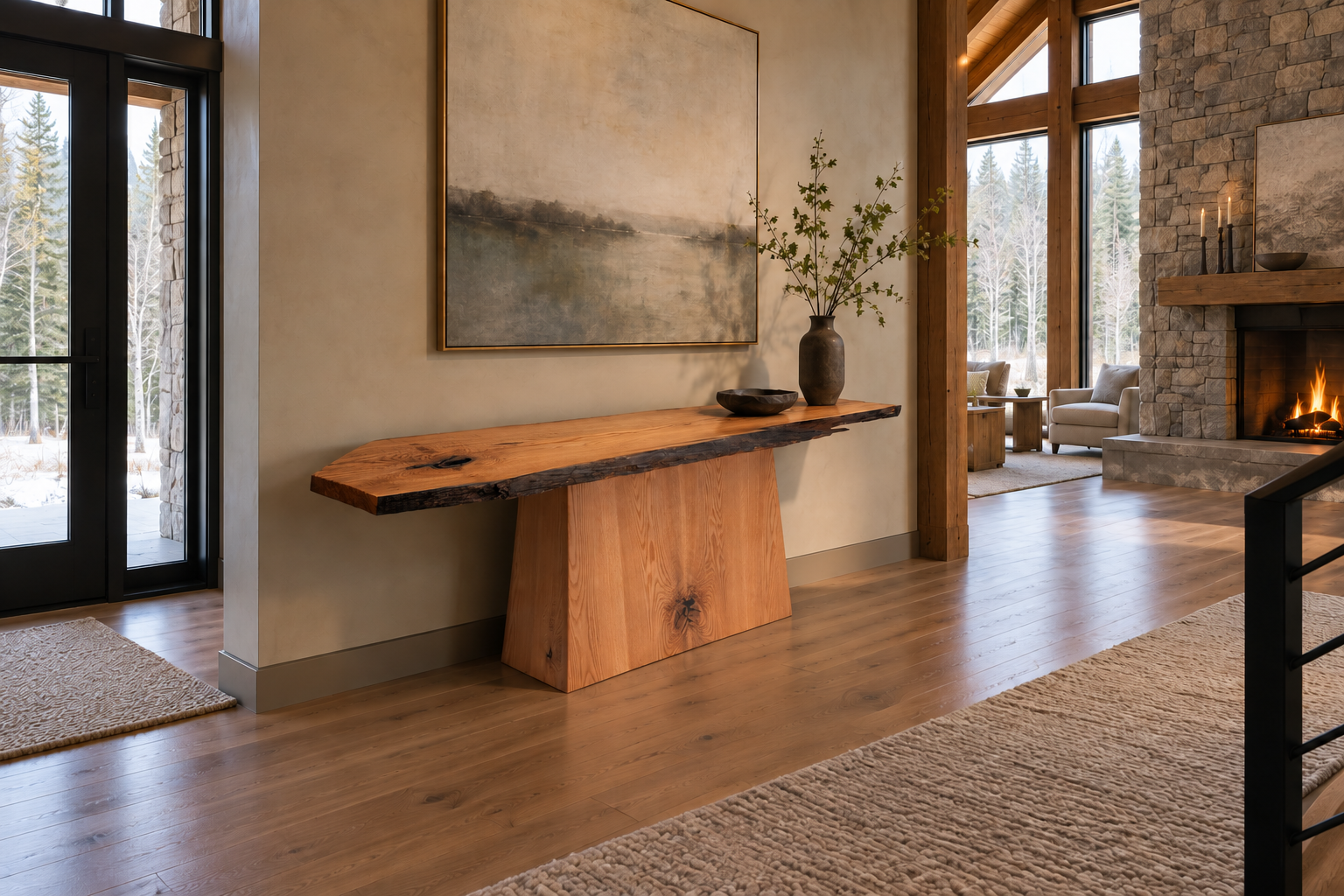
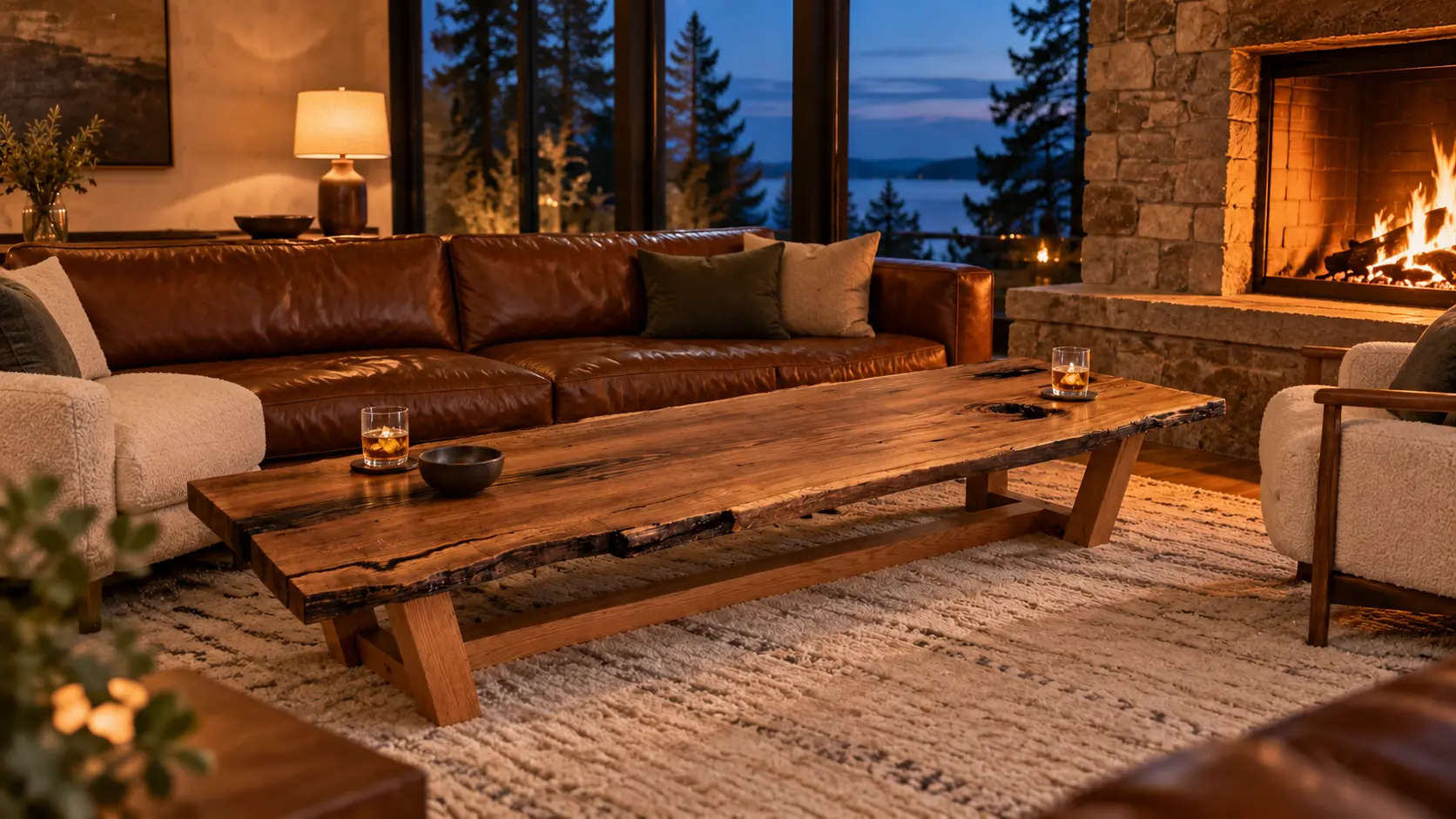
Lifestyle visualization of The Gathering Table in an empty Northern Michigan lake house gathering room at blue hour

Lifestyle visualization · Original furniture shown

At the mill, the good slabs stood upright.

They had straight grain, useful dimensions and futures that required very little imagination. This one had been set aside.

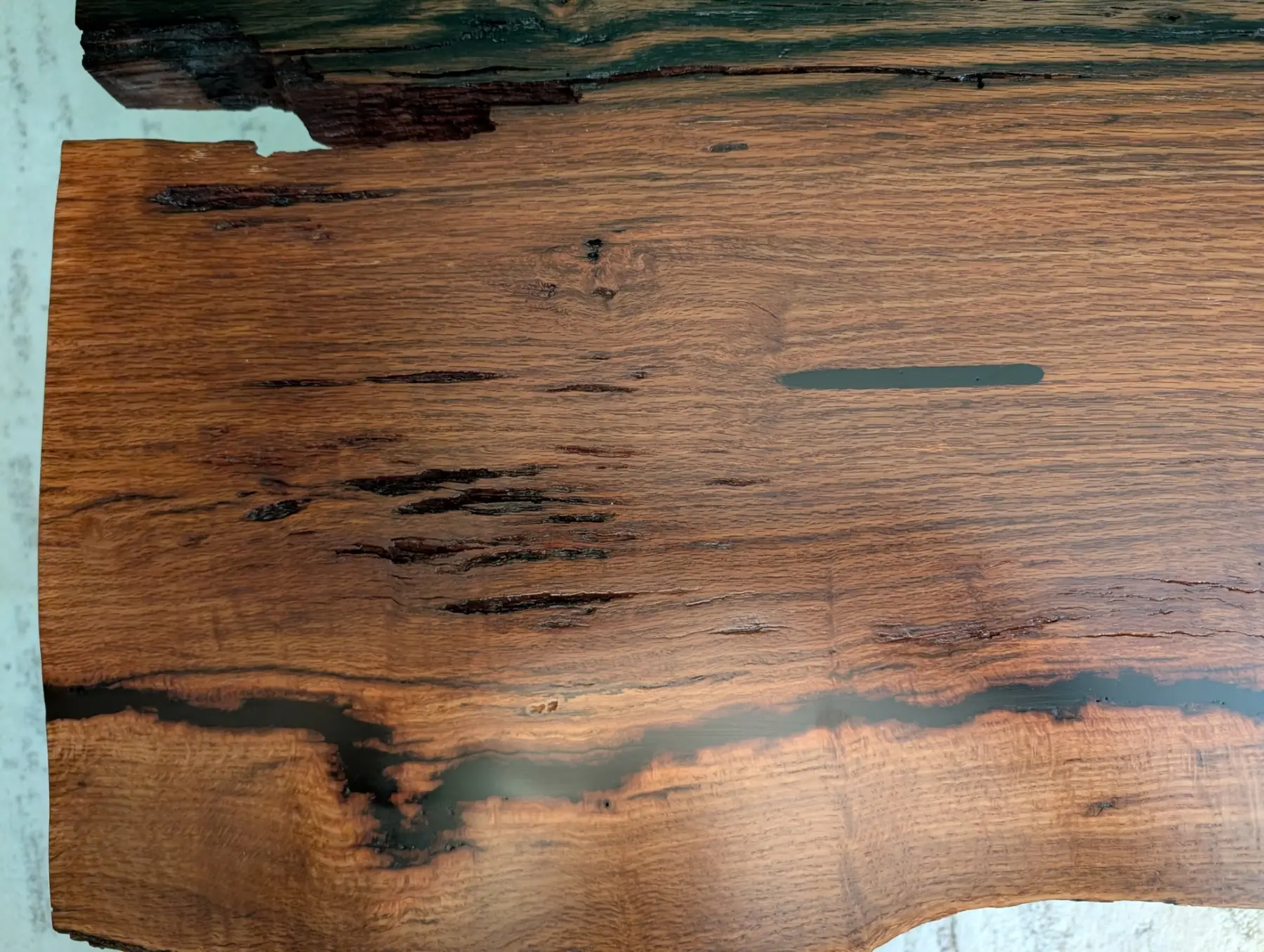
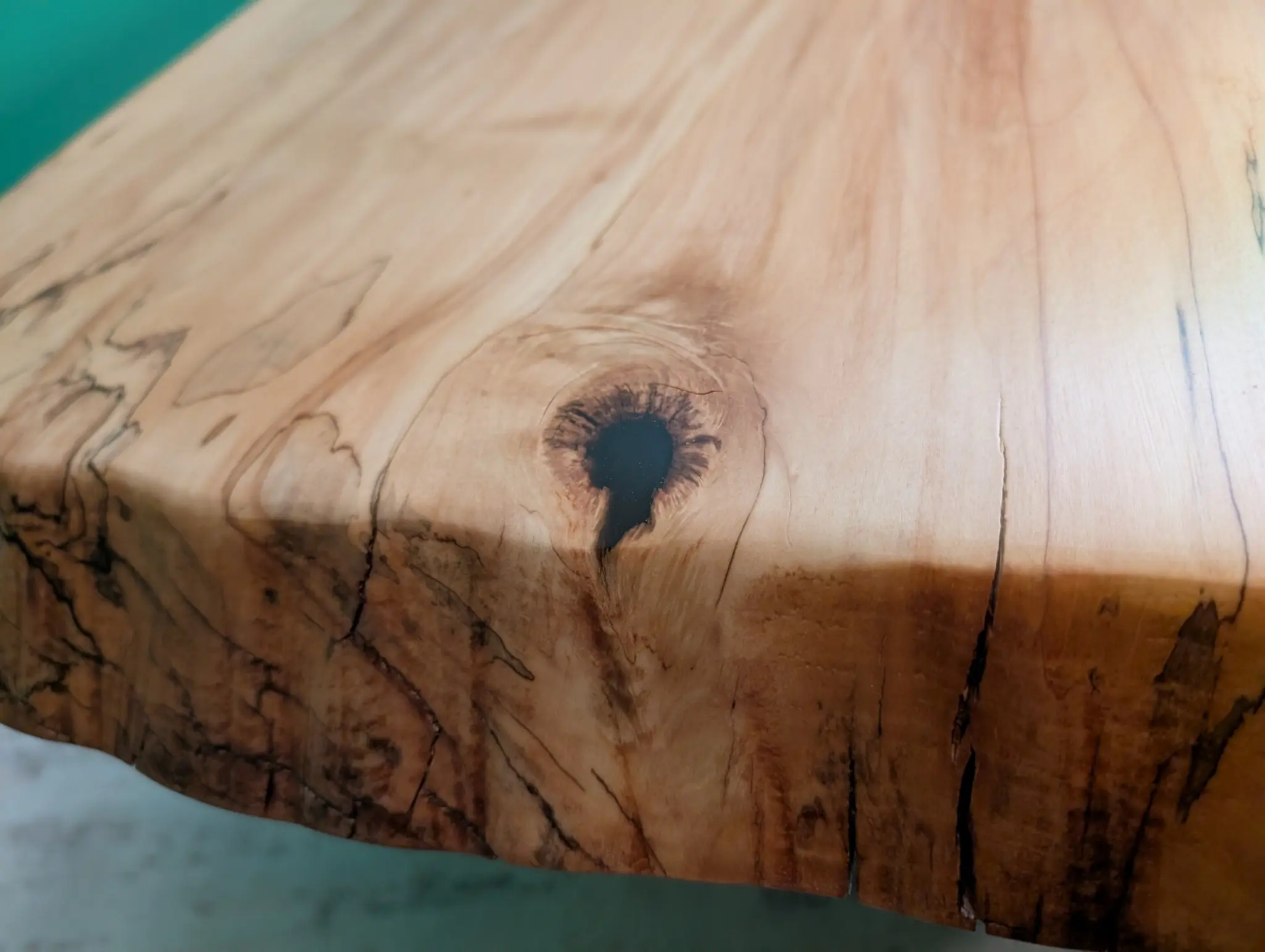
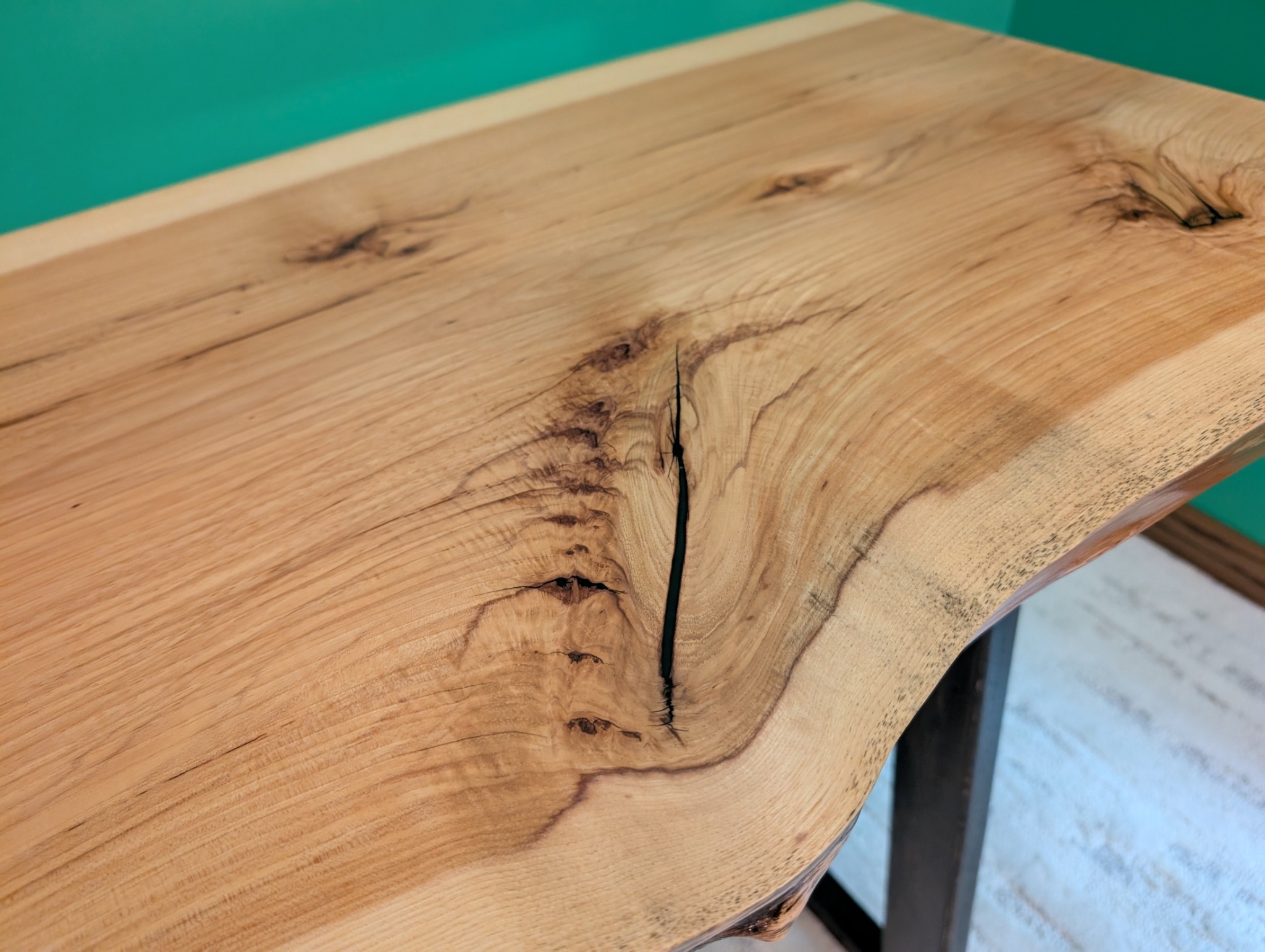
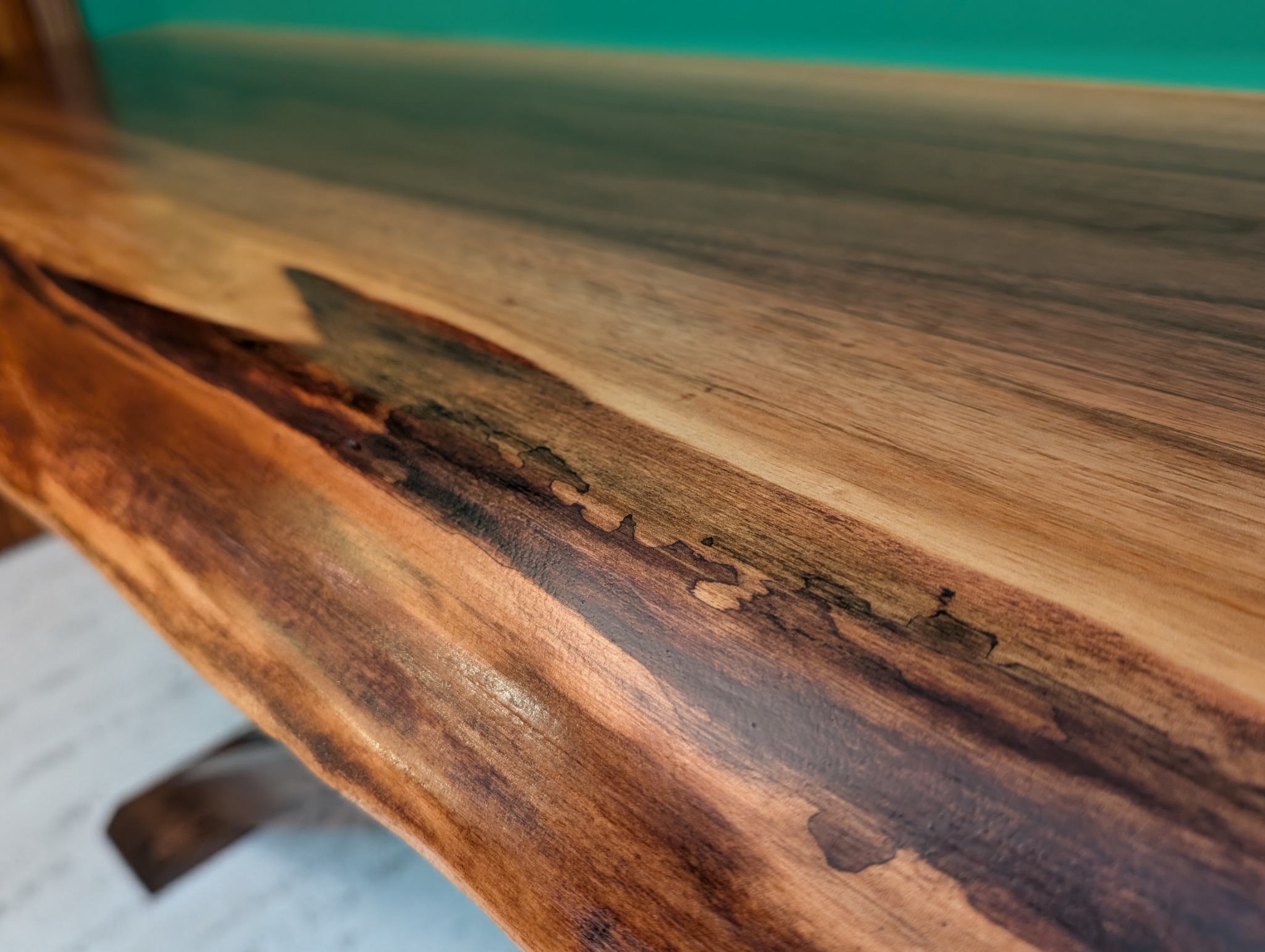
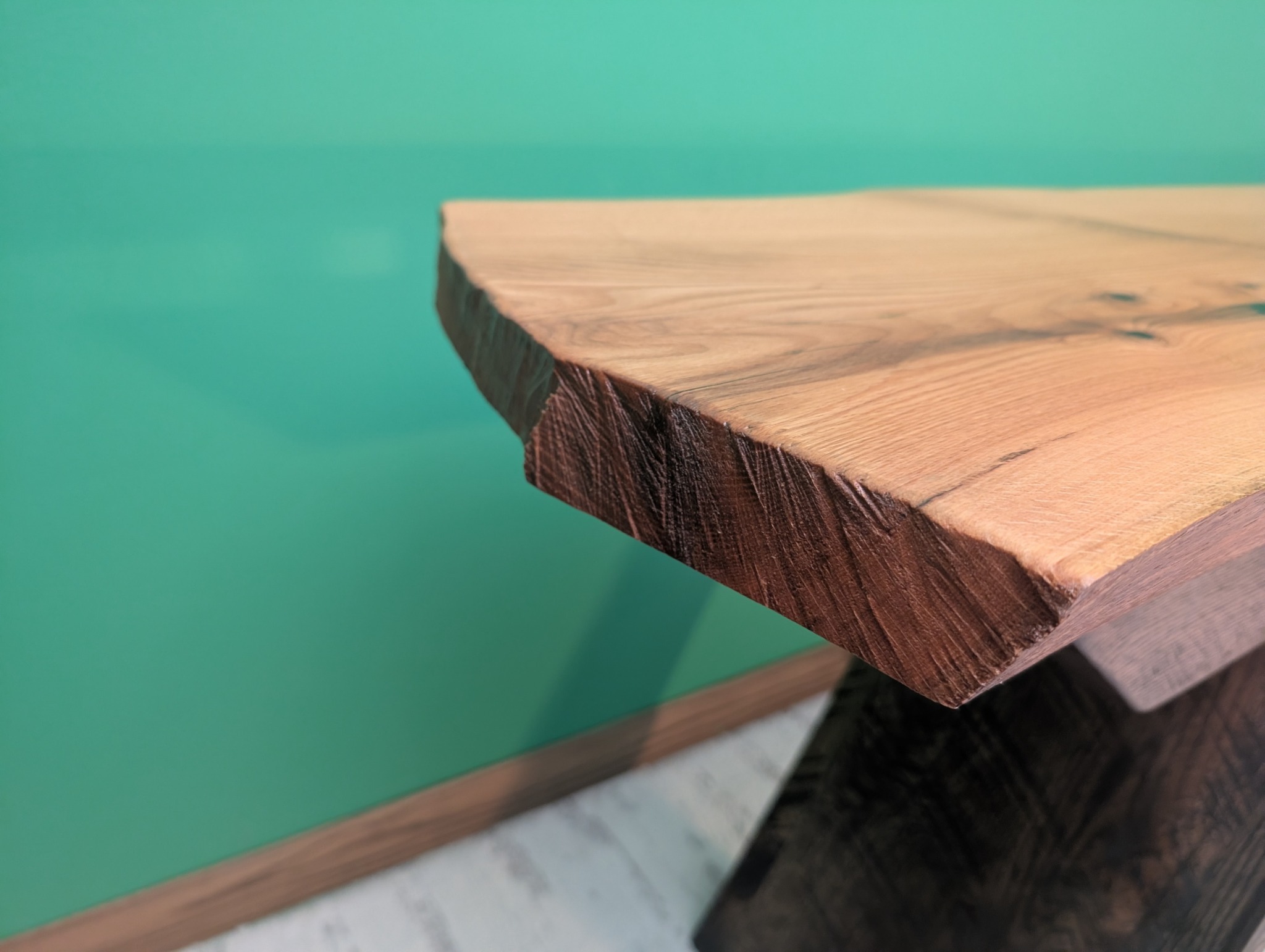
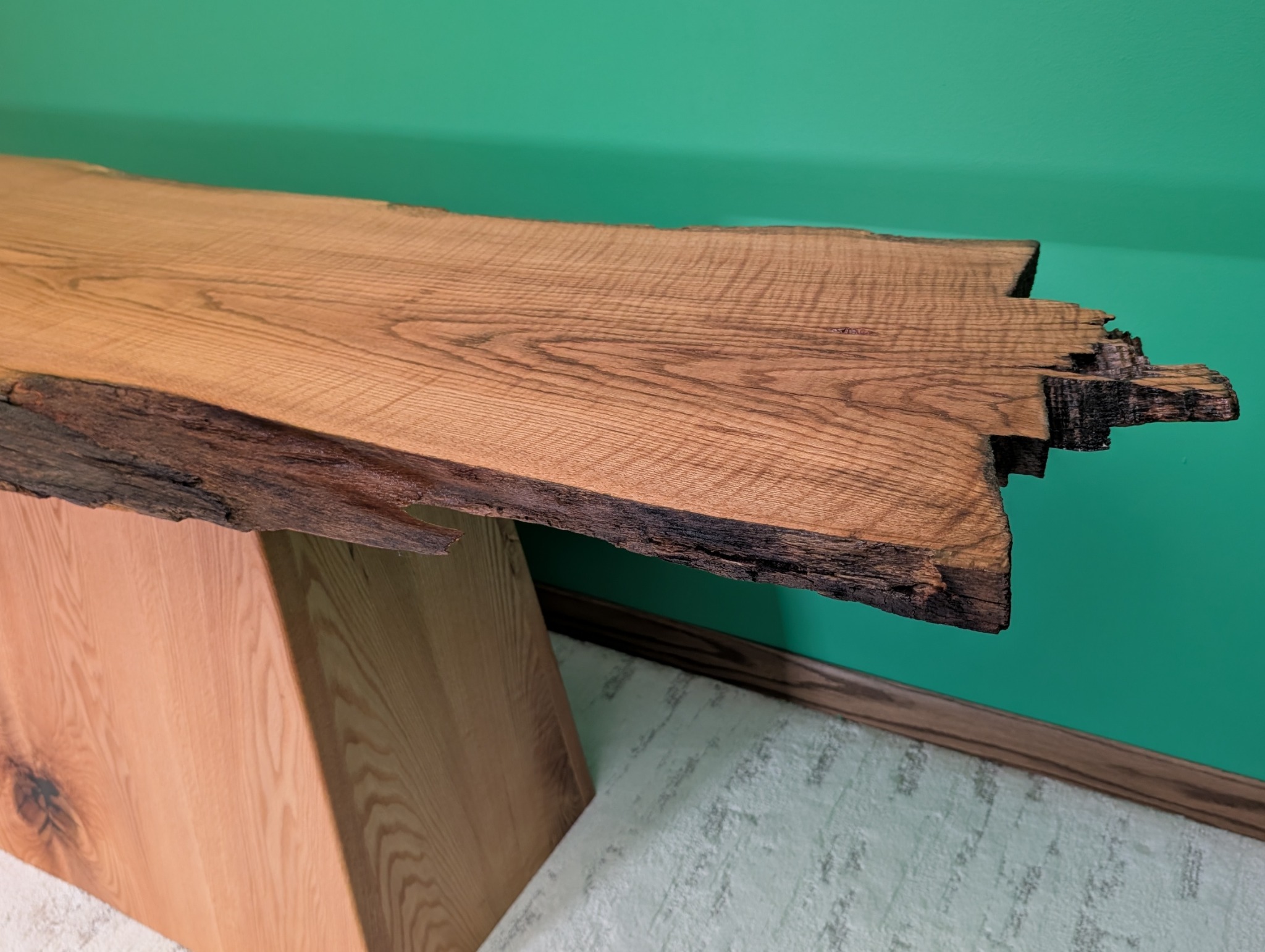
It was oak, technically. It was also split, hollowed, weathered, partially decayed and interrupted by enough holes to make any sensible cabinetmaker continue walking.

Noah and I discussed it. The verdict was practical and difficult to dispute: too far gone. Too many imperfections. No one knew what to do with it.

So I brought it home.

This did not solve the problem. It merely relocated it.

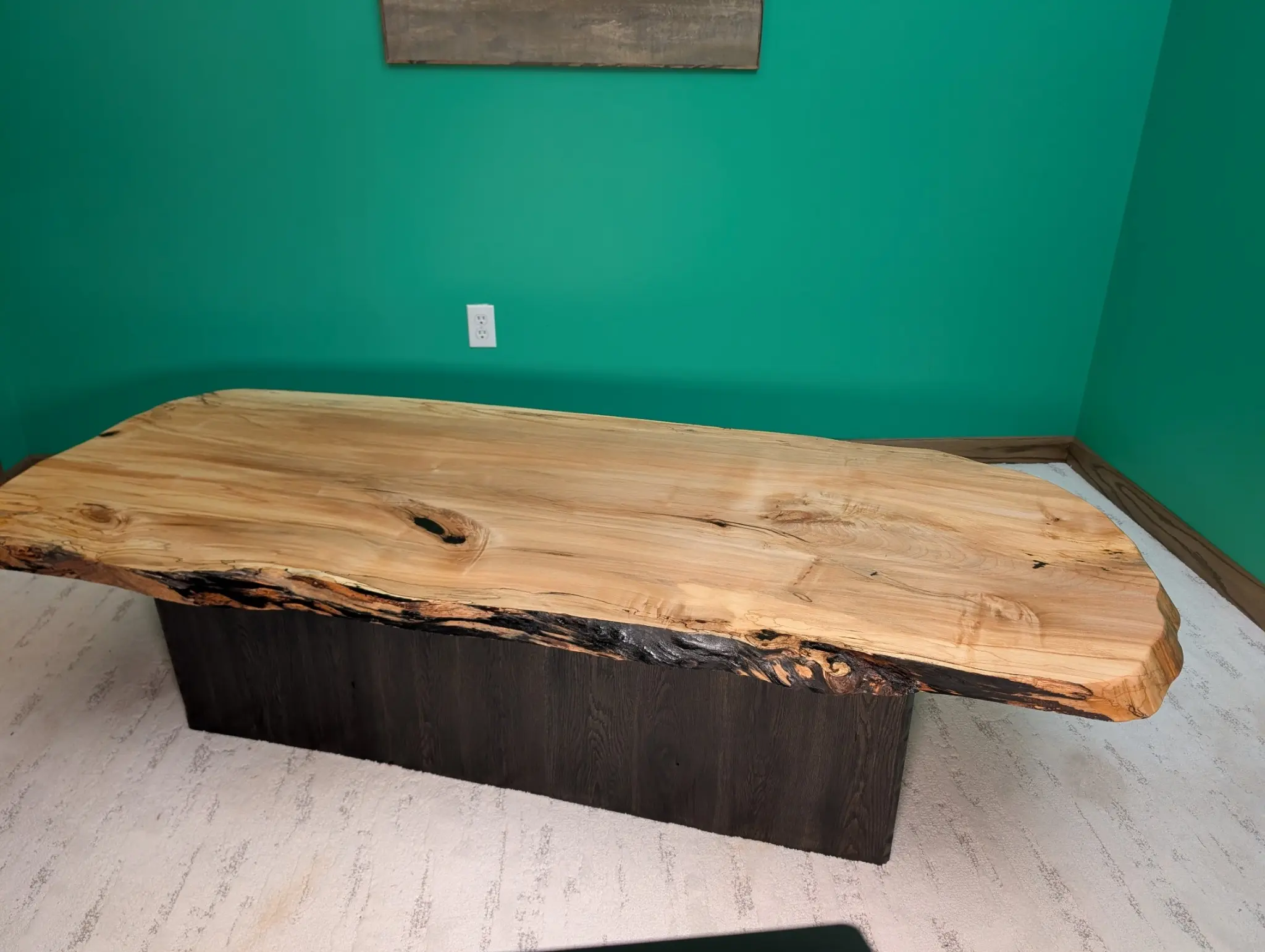
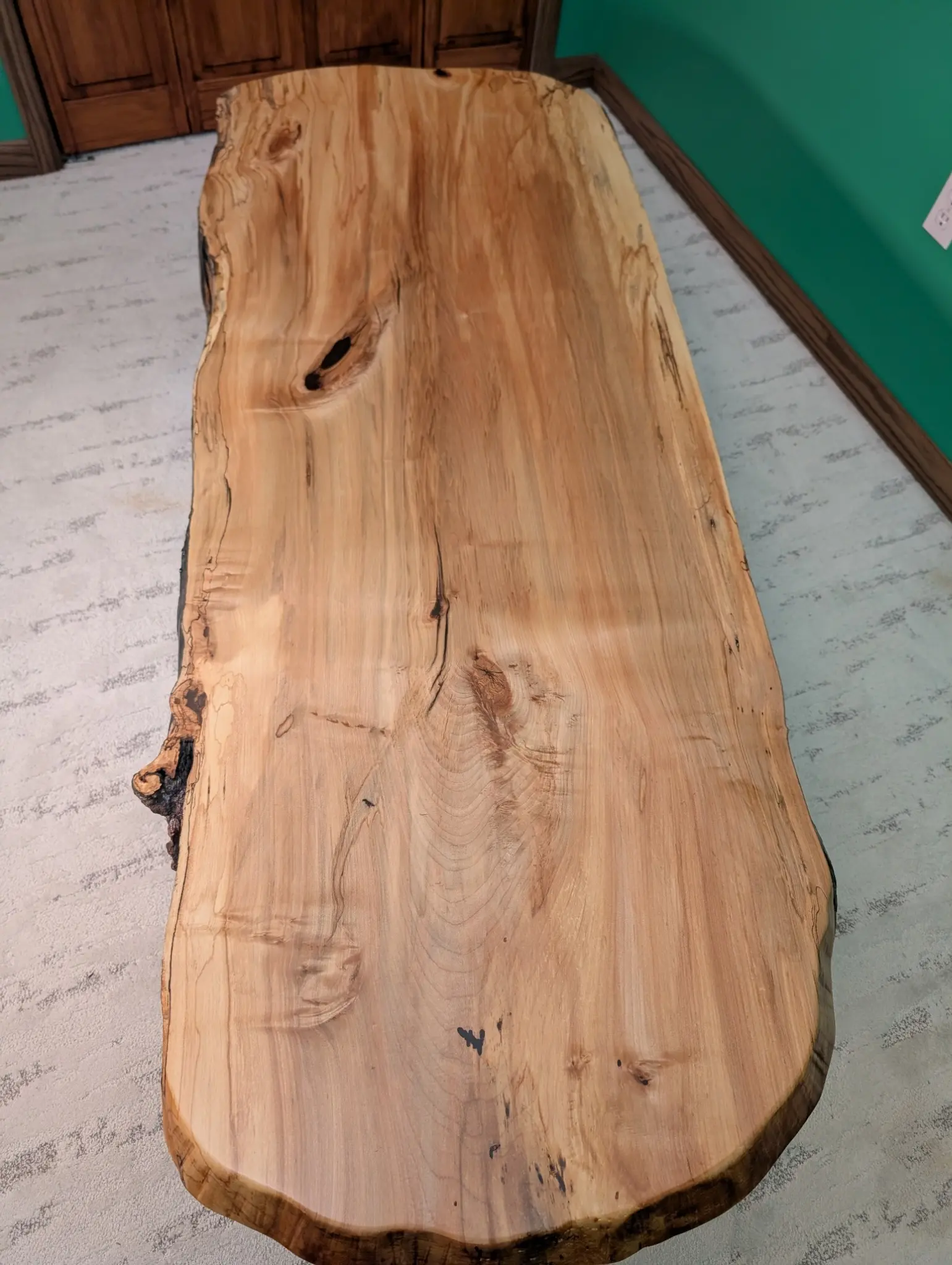
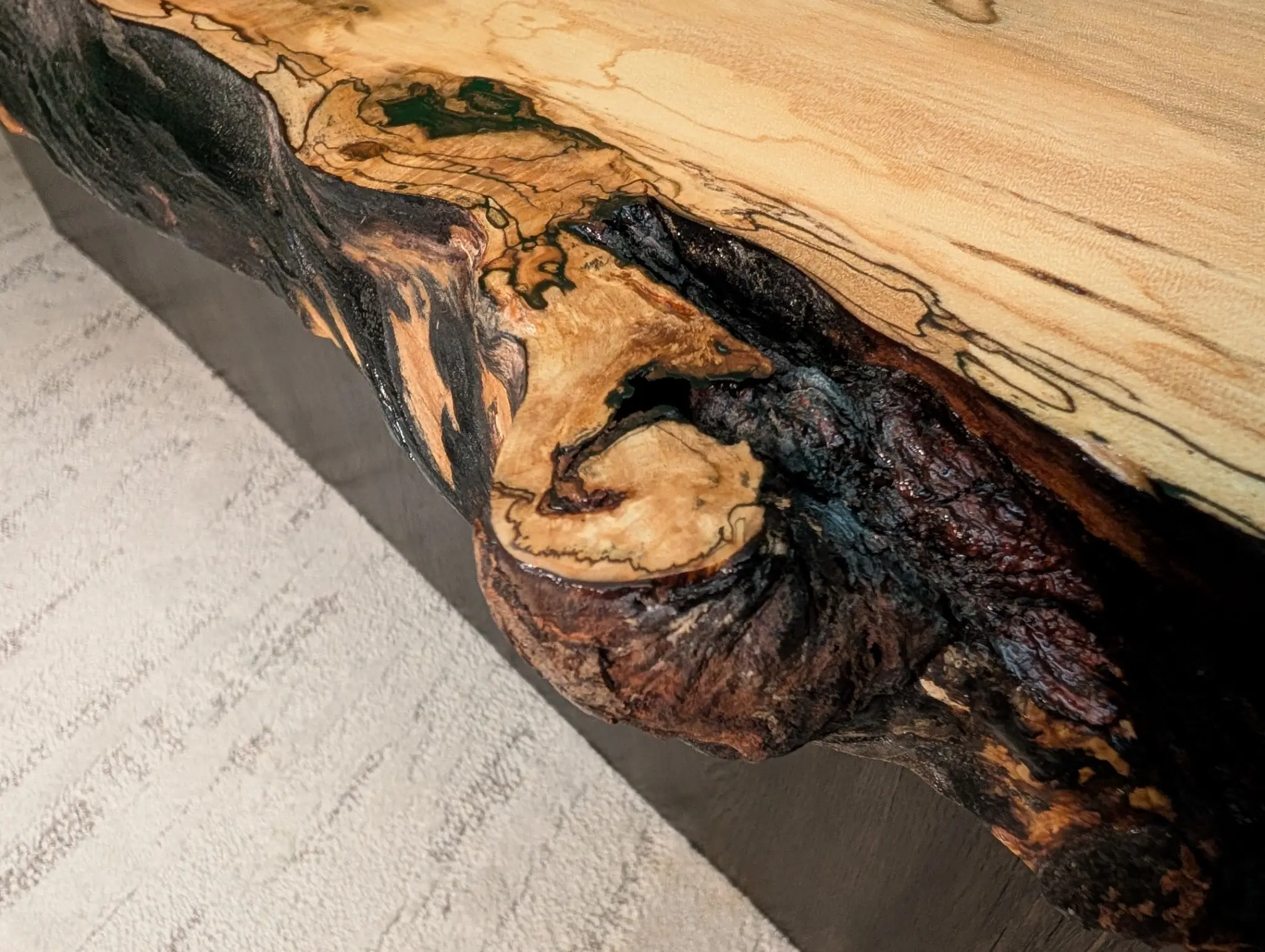
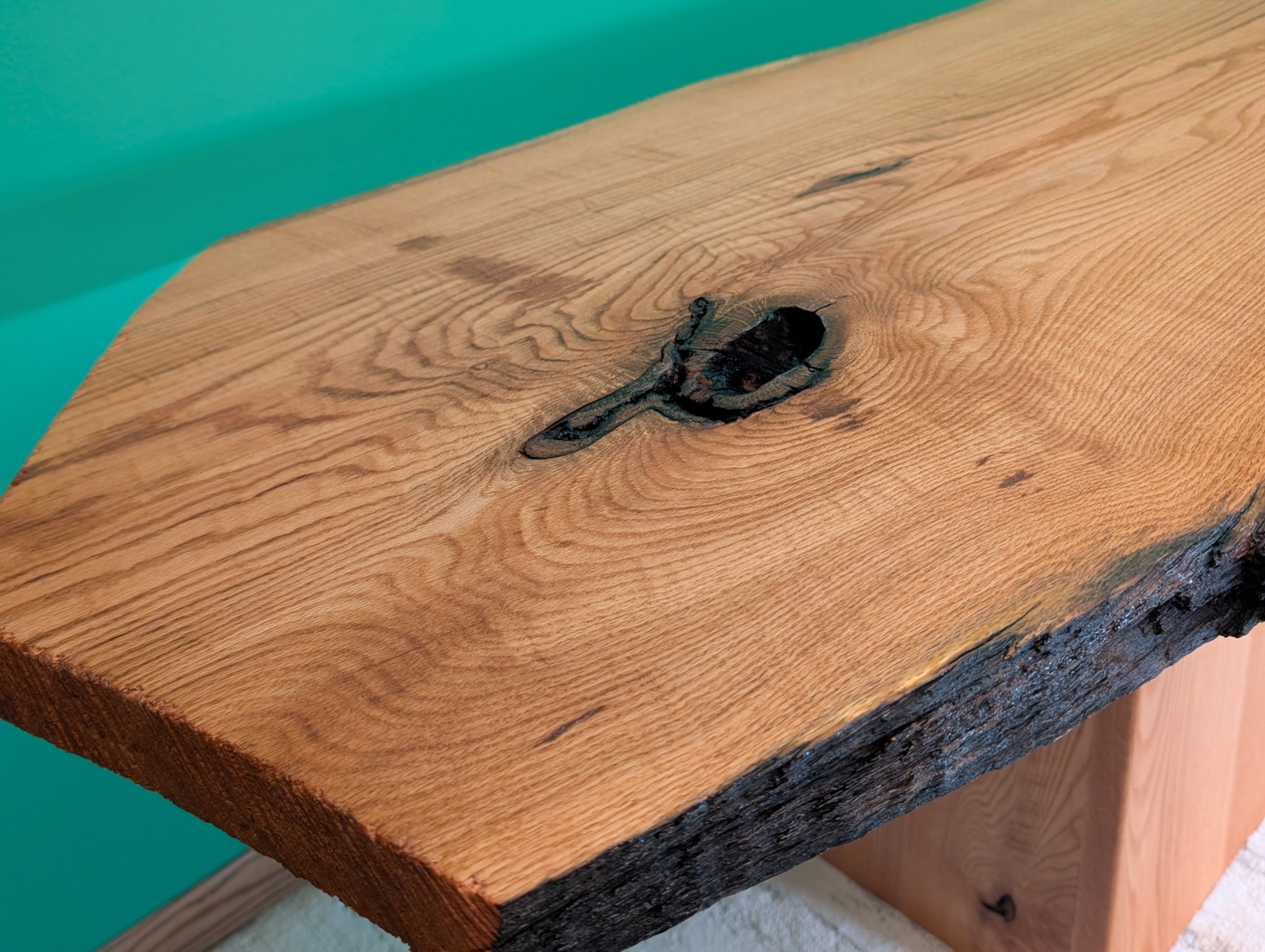
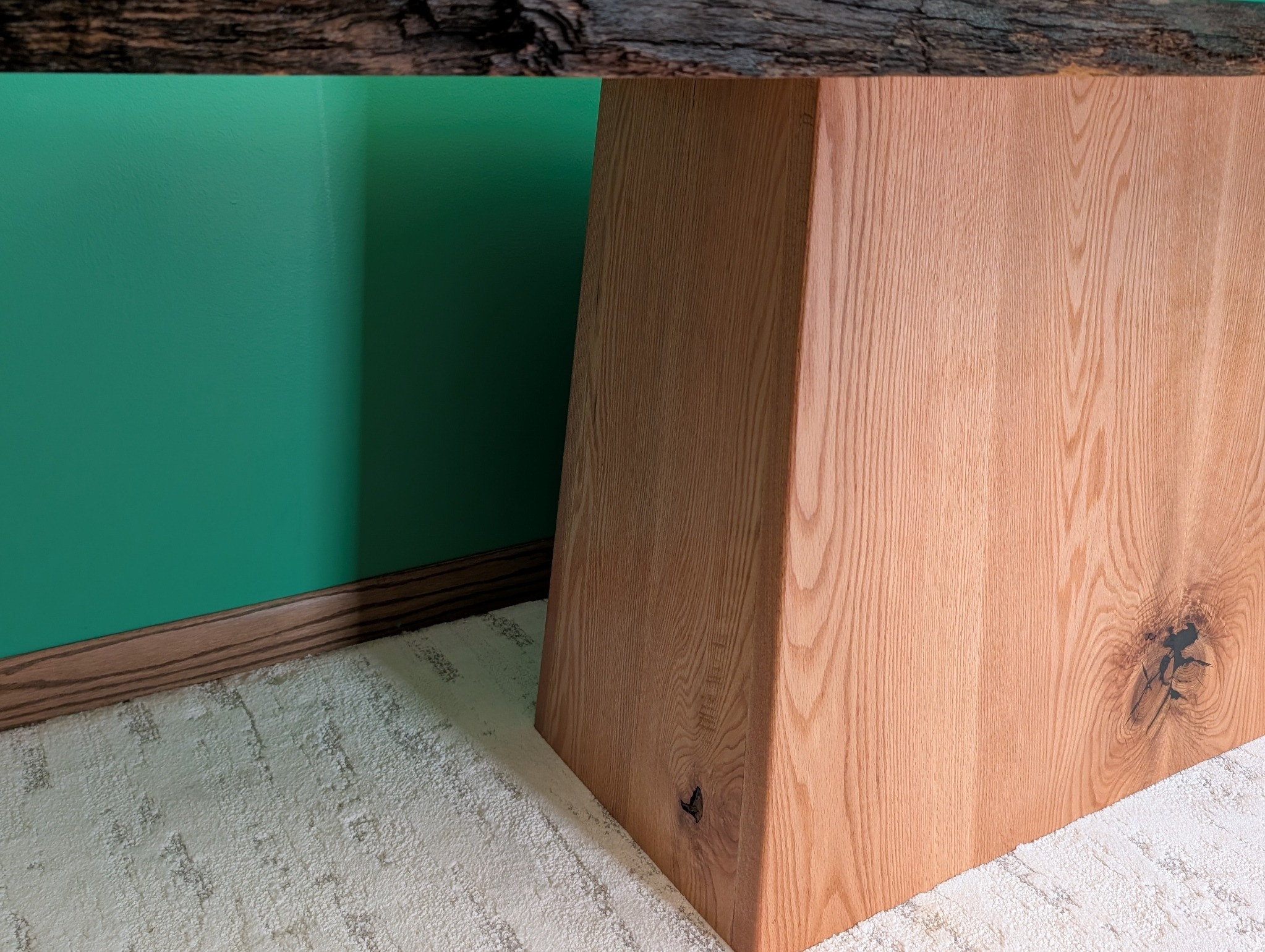
Even then, I did not know what the slab wanted to be. It waited while the weakened areas were cleaned and stabilized, the black repairs found their limits, and the largest fissures were allowed to remain open. Erasing the damage would have erased the reason to save it.

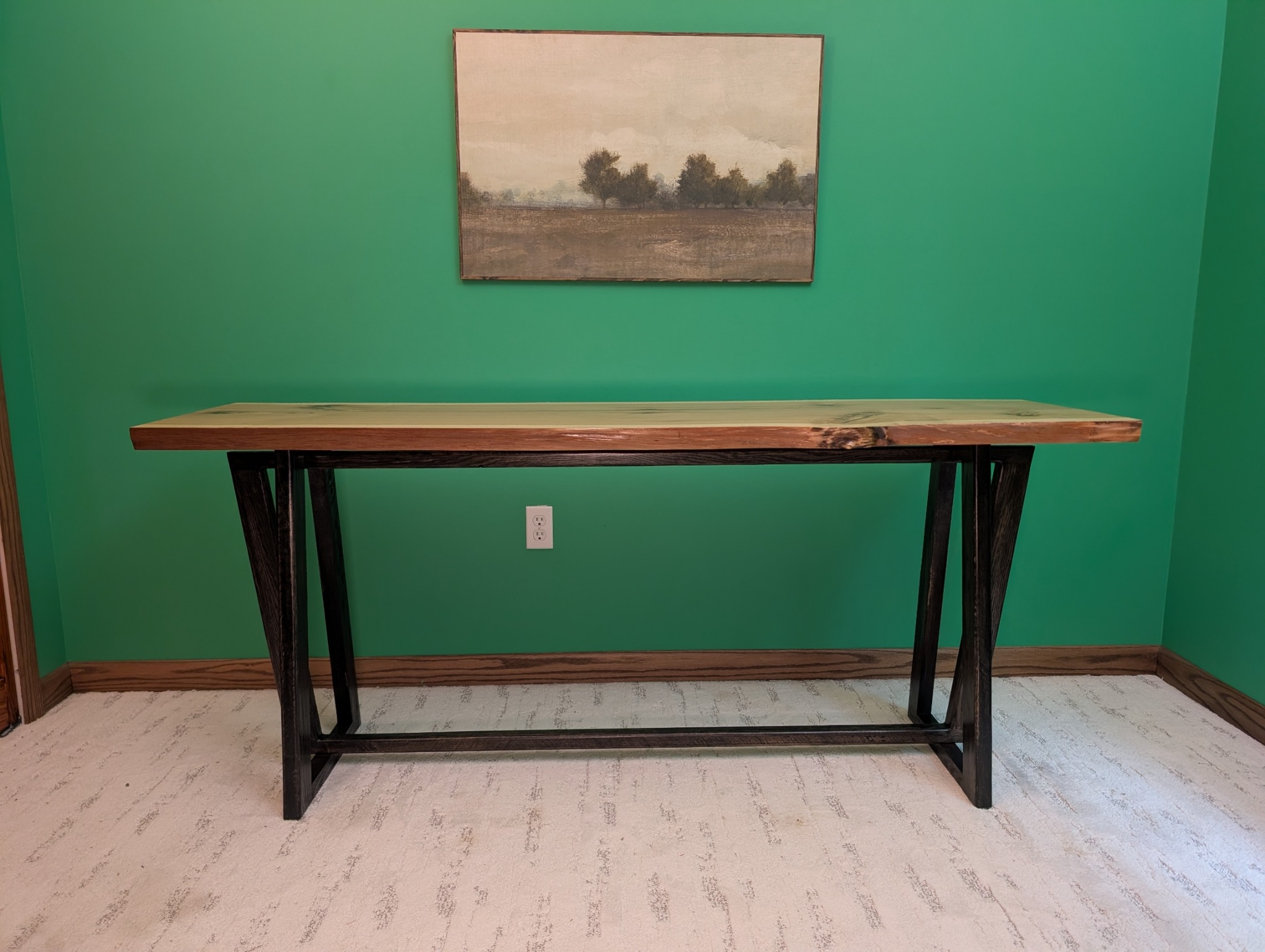
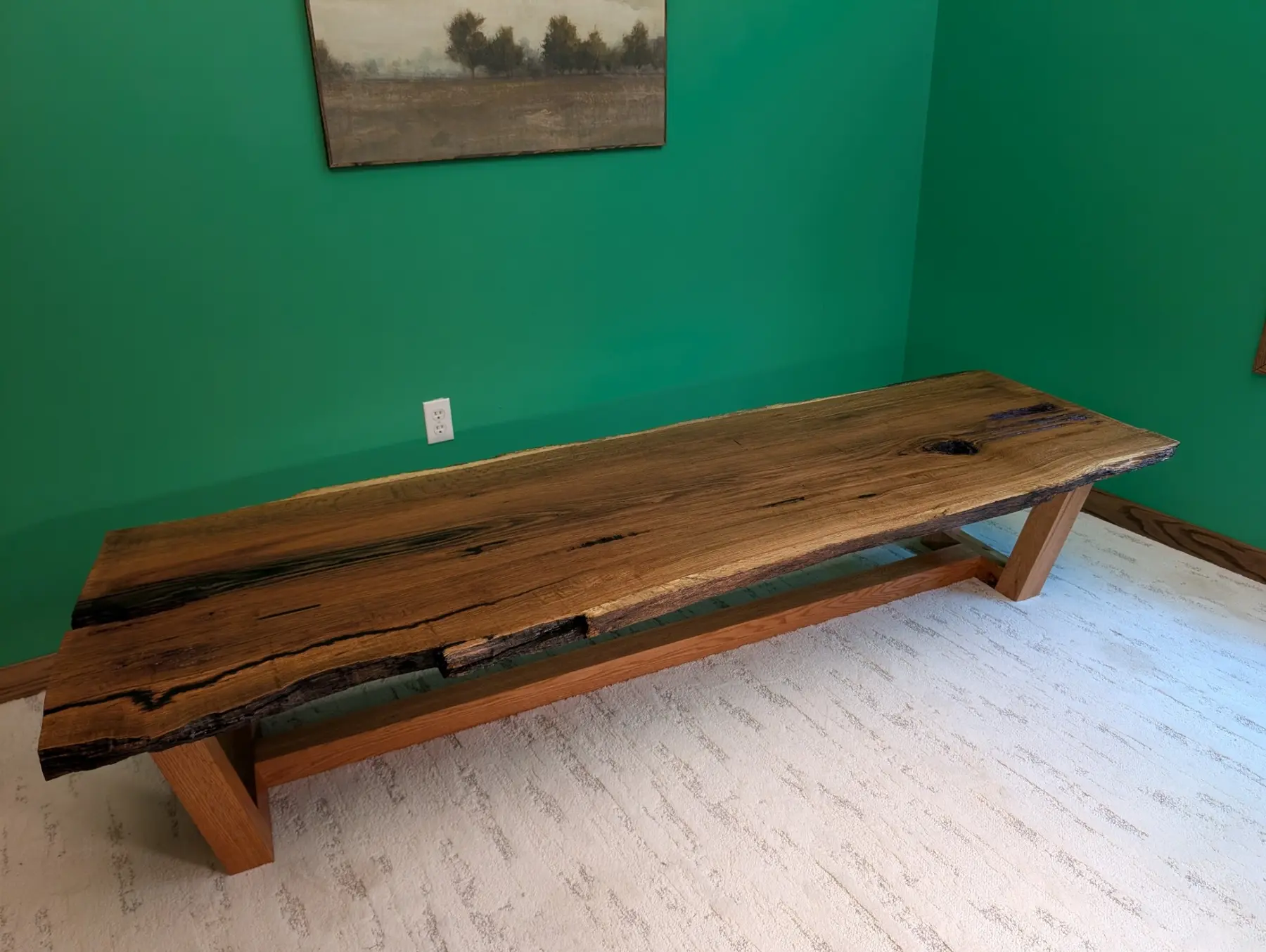
Eventually, the answer became a low table—long enough for a room to arrange itself around it and broad enough to hold the evidence without apology.

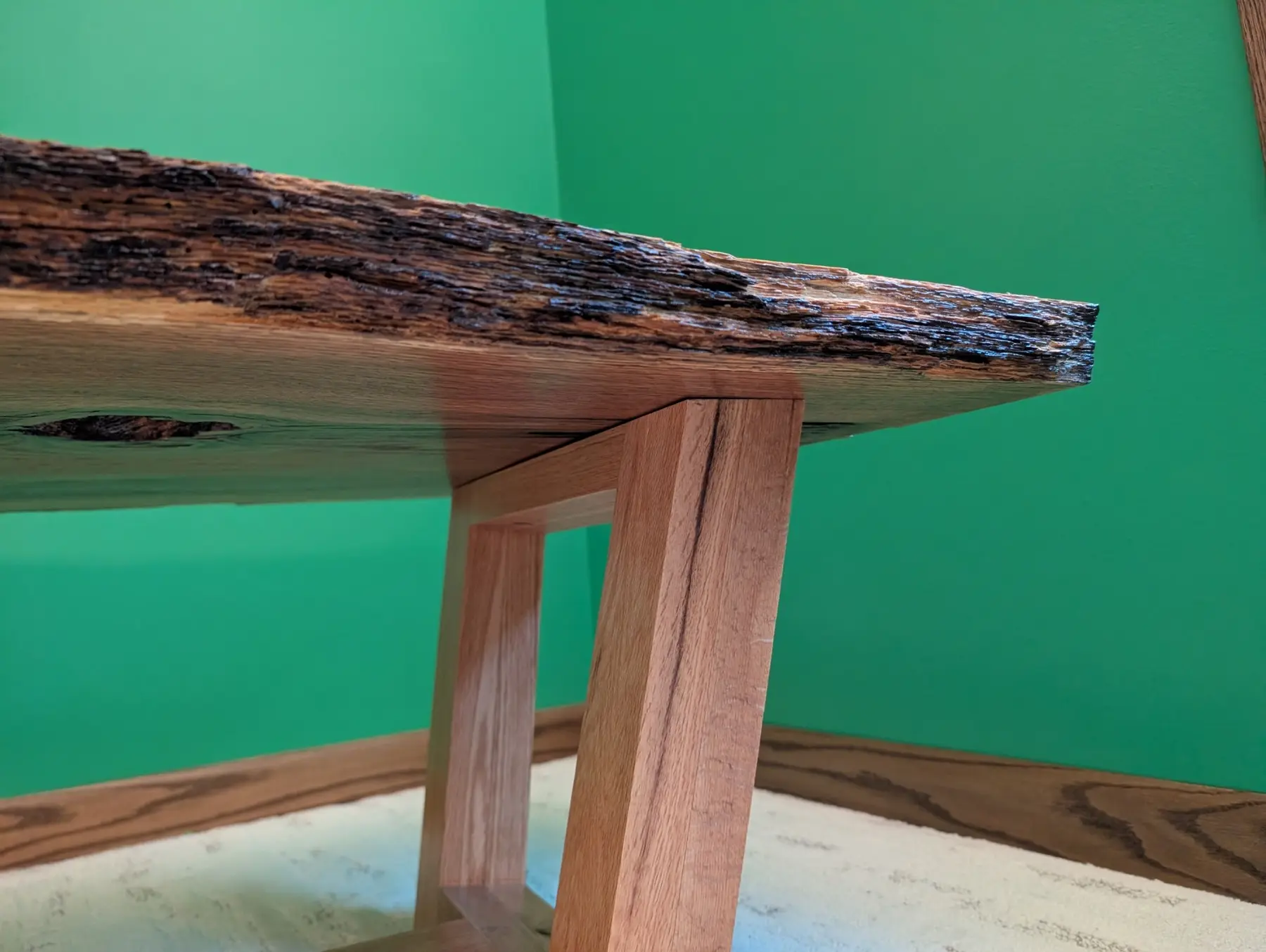
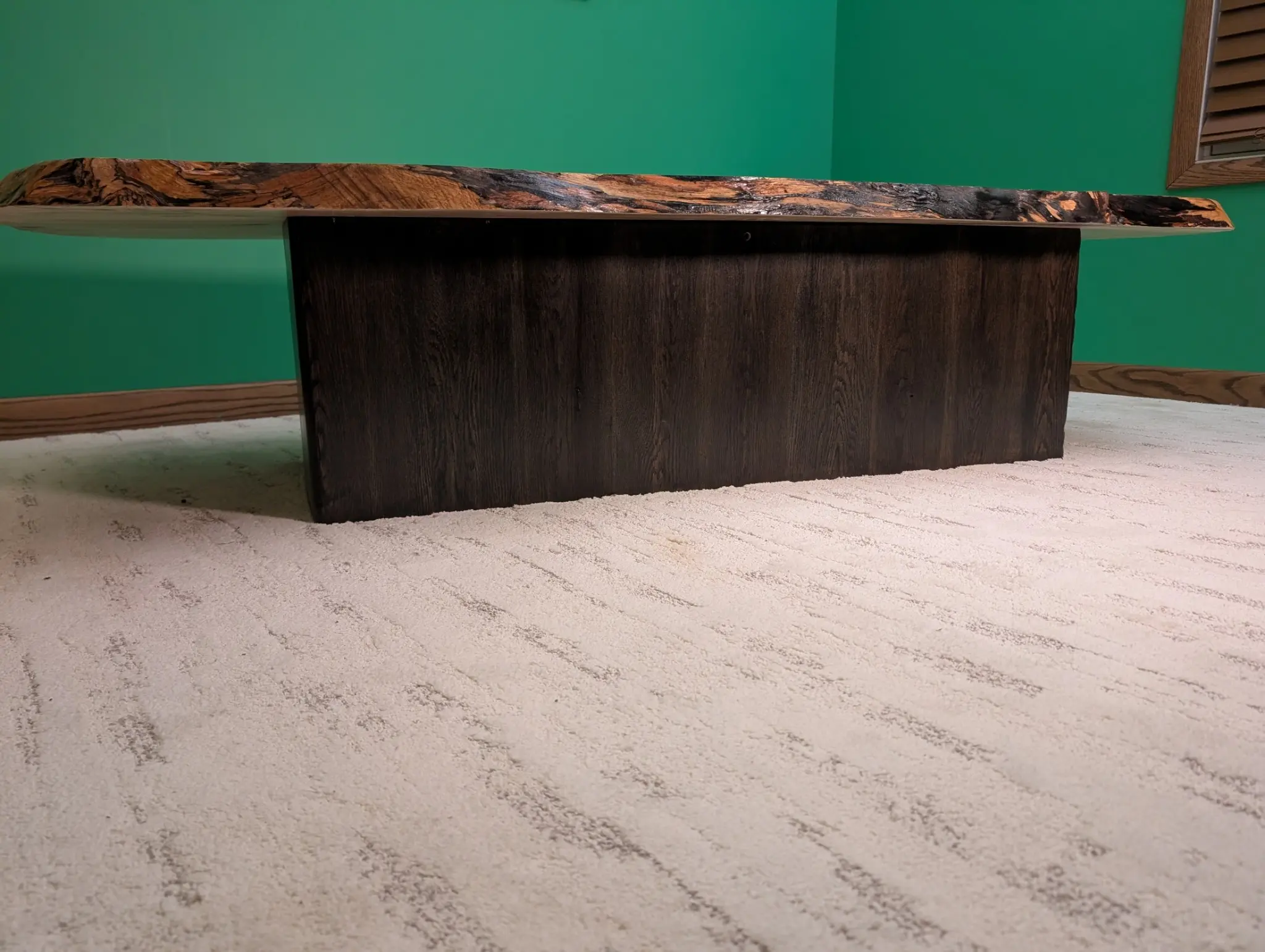
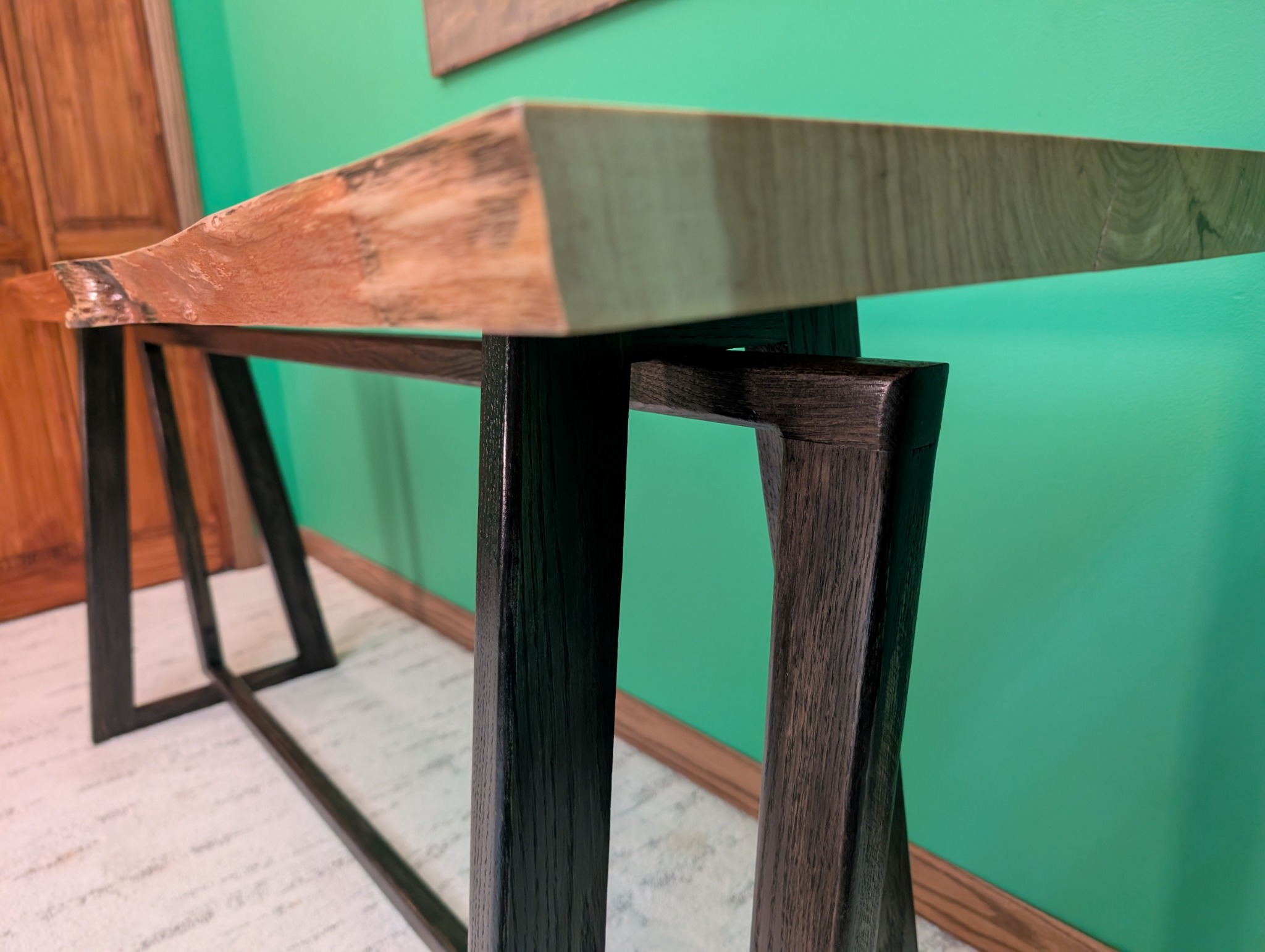
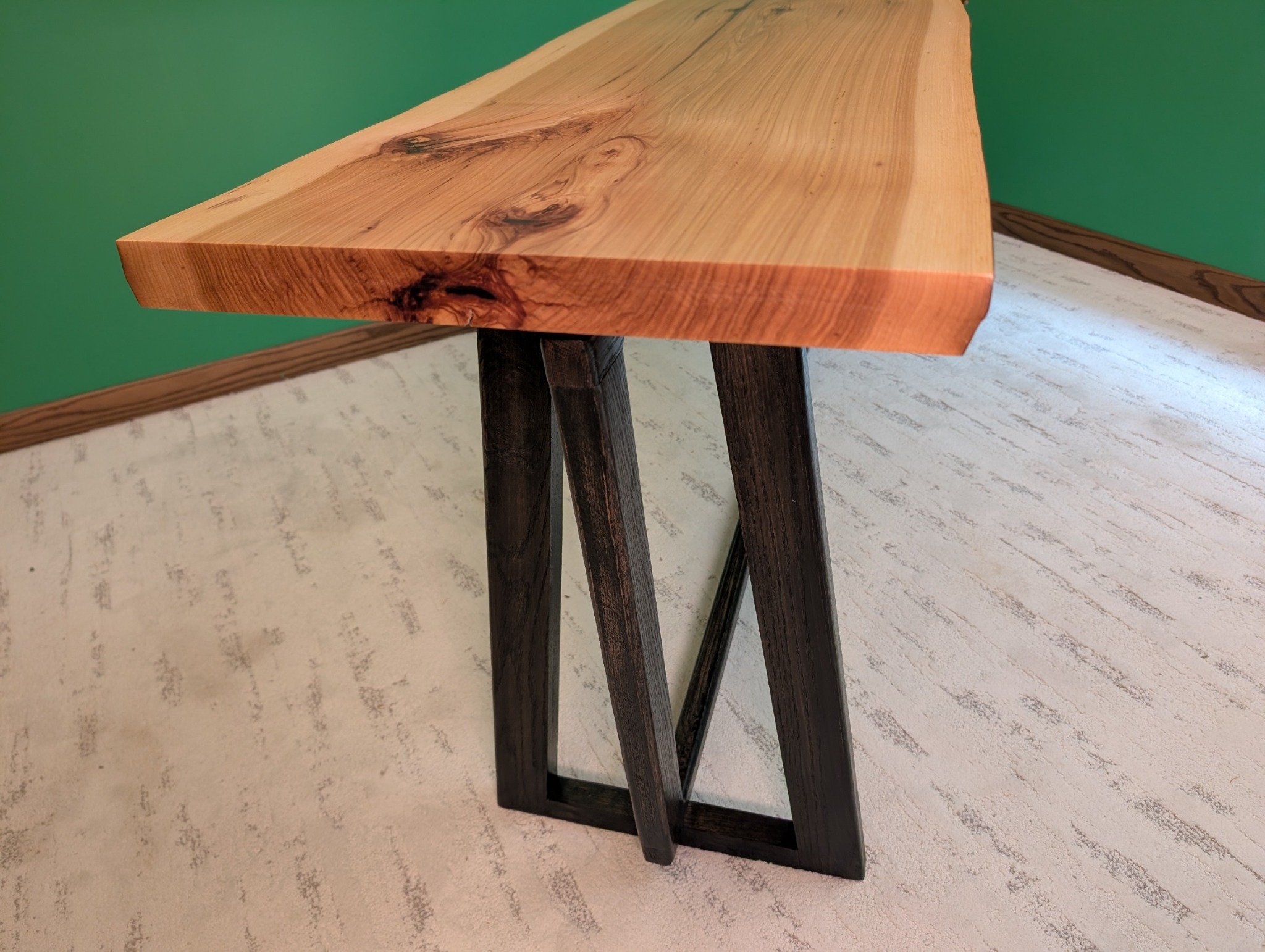
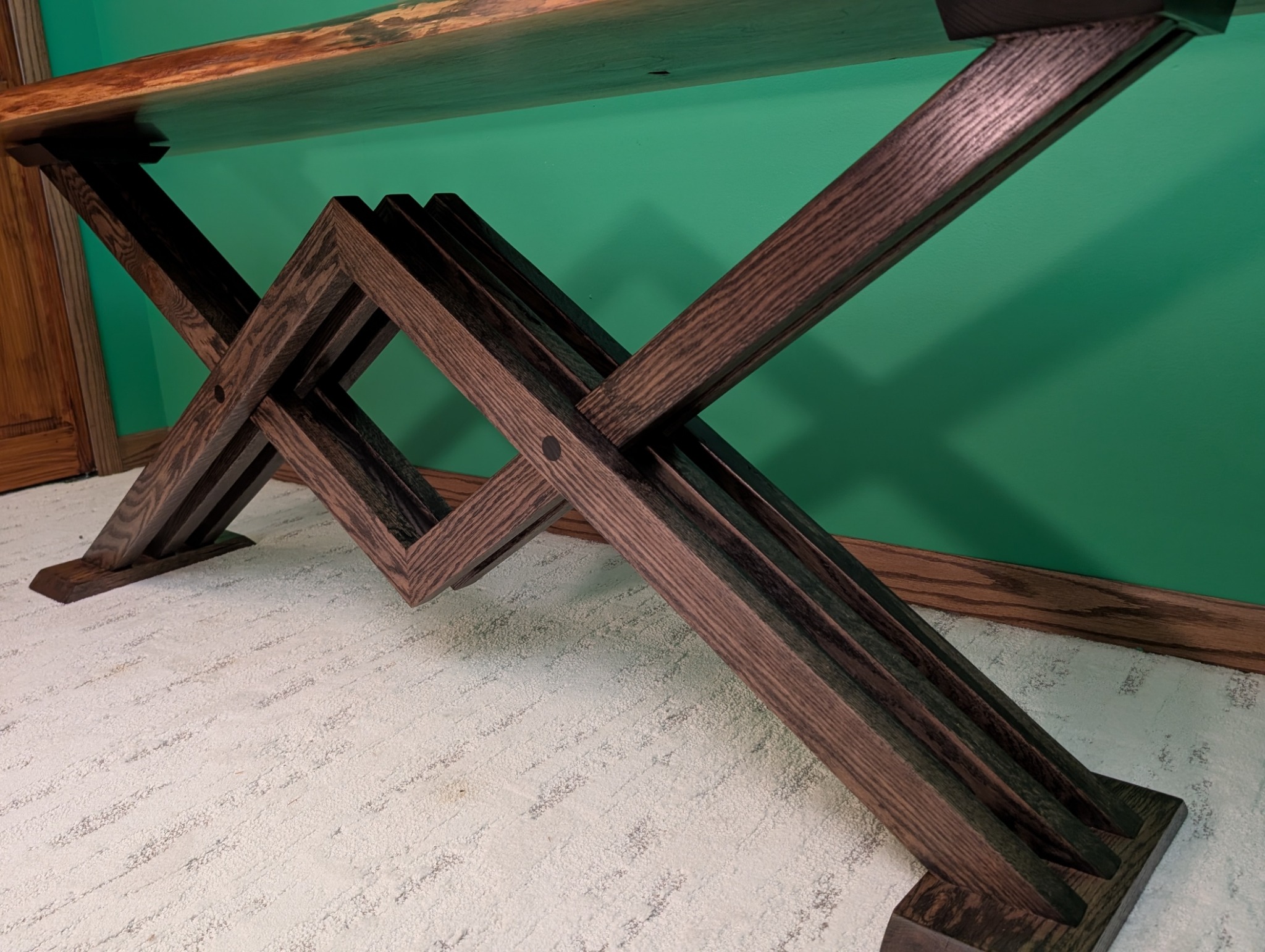
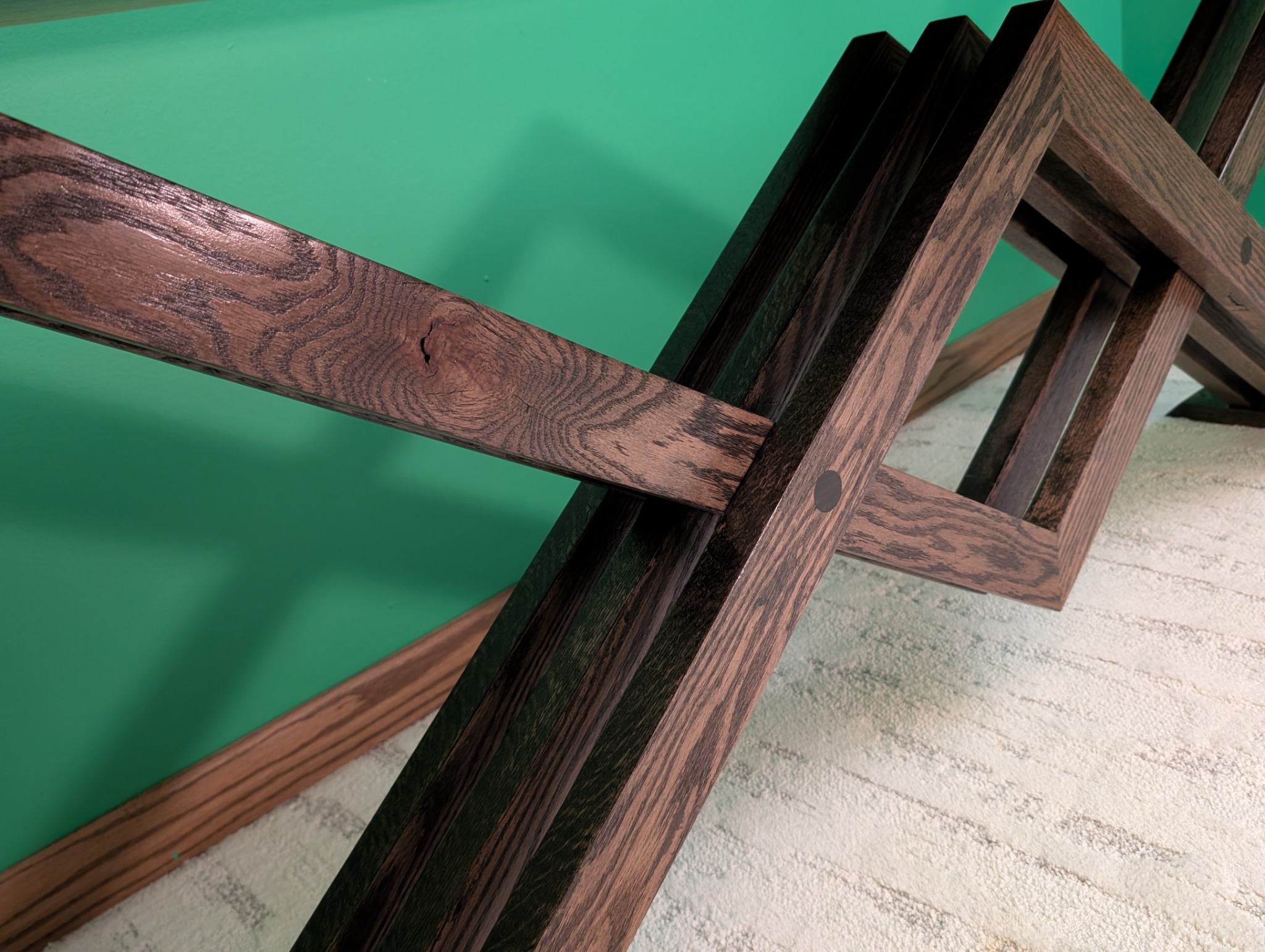
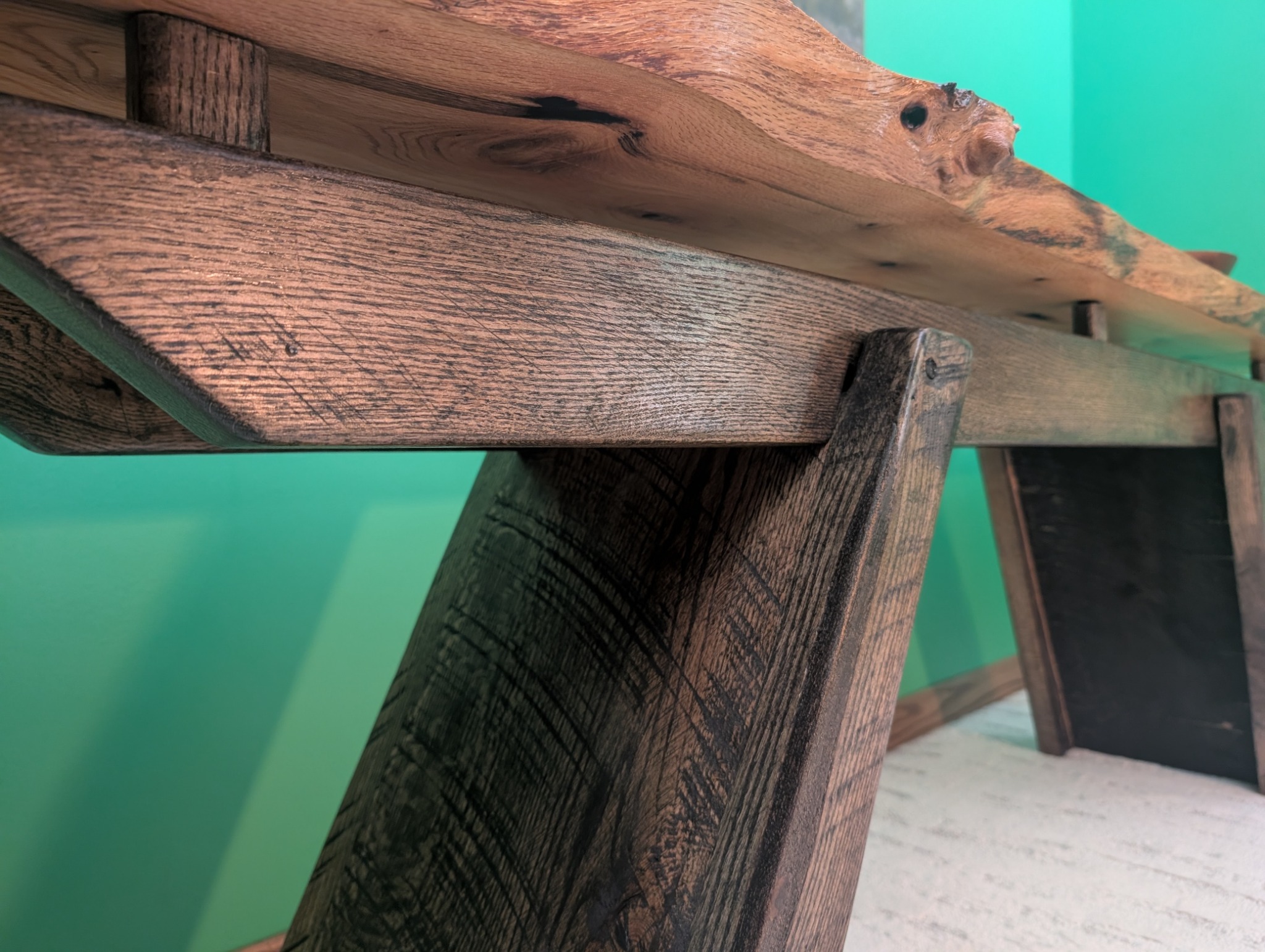
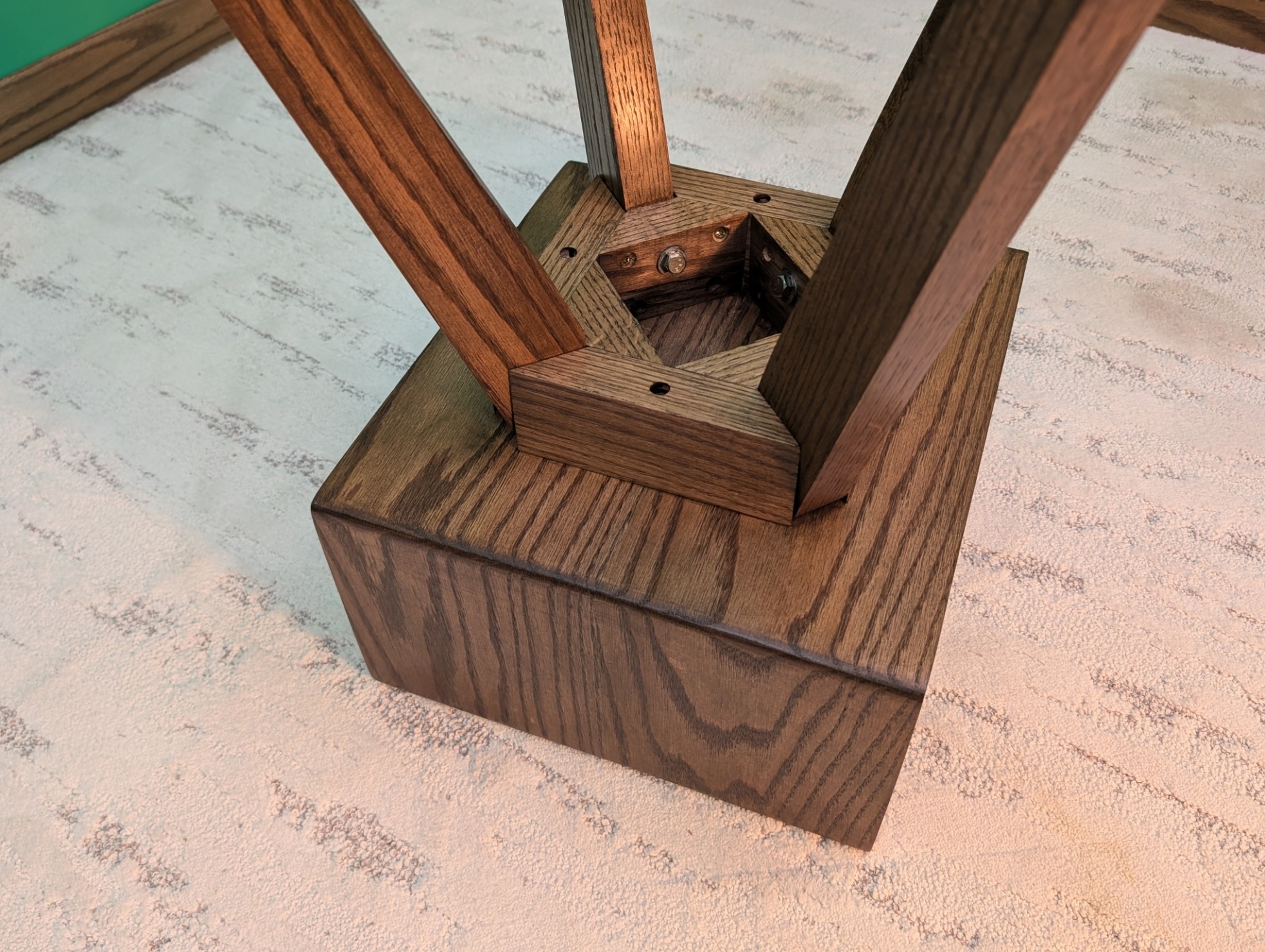
The oak base is deliberately quiet: four angled legs joined by one long stretcher. Its job is to provide order without pretending the slab arrived in orderly condition.

It is seven and a half feet of proof that “too far gone” is sometimes only another way of saying that the obvious answers have been exhausted.

No one knew what to do with it. Now we do.
The Boring Part

MaterialsRescued oak slab on a solid oak base
Length90 in. · 7½ ft.
WidthApproximately 28 in. nominal · 30 in. at its widest · 25 in. at its narrowest
Height16½ in.
SurfaceLive edges, open fissures, decay pockets and black stabilization fills retained as part of the slab
ConstructionRestrained angled oak base with a continuous low stretcher
FunctionGathering table, coffee table or low display table
StatusOne of one · Price and availability by inquiry

No one knew what to do with it. Now we do.
Some rooms are organized around furniture. Others gather around it.

The Gathering Table is one of one. Related work may begin with a particular room, an unusual slab, or another piece of material whose obvious future has already been ruled out. Special orders do not upset us.

Built to
gather
Custom acoustic treatment · Made to order

The Room Learns to Listen

A room need not look treated in order to sound considered.

Lifestyle visualization of The Room Learns to Listen acoustic tapestry above The Long Way Around in a brick and stone entryway

Lifestyle visualization · Custom proportions shown

Hard rooms have a particular way of announcing themselves.

Tile underfoot. Masonry on the walls. Glass nearby. A closing door, a set of keys, or an ordinary conversation becomes a small public address system.

The usual solution looks like a solution: squares of foam, fabric-covered rectangles and other visible evidence that someone arrived carrying a calculator.

This one arrived carrying a sunrise.

Behind the woven textile is a substantial rock-wool core held within a handcrafted wooden frame. The frame hangs from structural slats spanning two wall studs and stands slightly away from the wall, leaving both faces acoustically active. Reflected sound is absorbed instead of being sent back into the room to continue the argument.

It will not prevent sound from passing through a wall. That is soundproofing, and this is not pretending to be soundproofing. Its work happens inside the room: reducing flutter echo, shortening reverberation and taking the hard edge off spaces dominated by tile, glass, wood and masonry.

It is acoustic treatment for rooms that have no desire to look acoustically treated.

The Boring Part

ConstructionWoven textile over a rock-wool acoustic core in a handcrafted wood frame
Original shown60½ in. wide × 50½ in. tall × 3½ in. deep
Wall spacing½-in. rear standoff · Approximately 4 in. total wall projection
WeightApproximately 24 lb.
Acoustic coreApproximately 12,240 cu. in. · 7.1 cu. ft. of rock wool
MountingStructural wall slats designed to span two studs
PurposeReduces reflected sound, flutter echo and reverberation within the room
CommissionsDimensions, proportions, textile and frame finish selected for the room

A quieter room, without asking the room to dress like a recording studio.
Built for the wall—and the room behind it.
Each acoustic tapestry is commissioned for its setting. Scale, proportion, textile, frame species and finish can be chosen to work with the architecture while the concealed mineral-wool core attends to the acoustics.

Made to
listen
Available by inquiry

The Trouble With Restraint

A calm dark pedestal beneath a slab that declined to behave.

Lifestyle visualization of The Trouble With Restraint in a refined Northern Michigan timber home

Lifestyle visualization · Original furniture shown

The original idea was restraint.

A coffee table. Low, broad and useful. A simple dark pedestal beneath a single slab of spalted maple. Nothing theatrical.

The base kept its part of the bargain.

The maple did not.

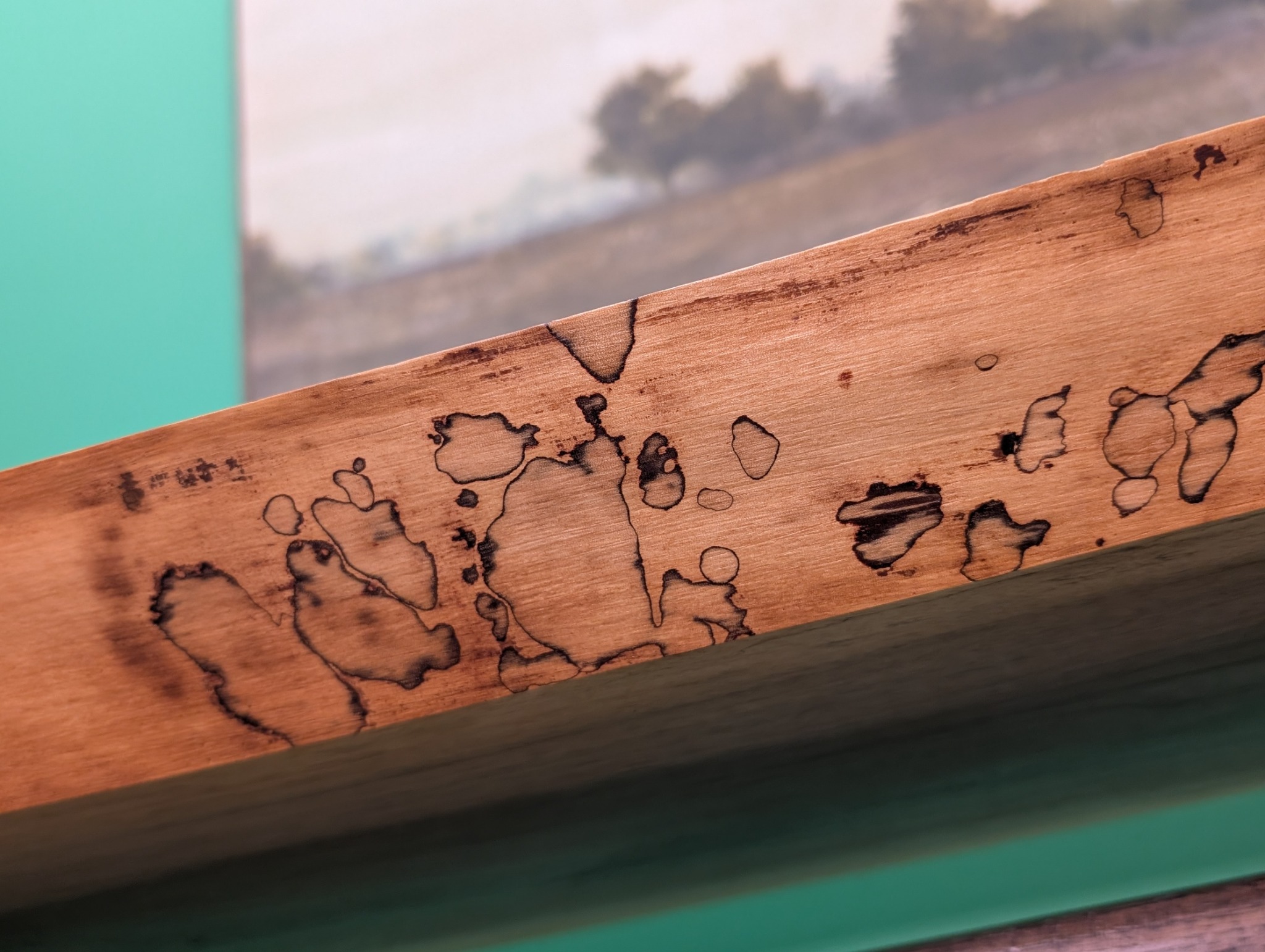
Every few inches, it presented another reason to stop and look: wandering black lines, small knots, ghosted figure, abrupt changes in color and one long edge caught somewhere between decay and preservation. Even the ends refused to resolve themselves into ordinary straight lines.

Trying to quiet any of it would have defeated the purpose.

The weakened areas were stabilized. The openings were filled. The ends were shaped by hand, following the material rather than forcing it into symmetry. The dark monolithic base was kept deliberately simple, giving the slab one firm horizontal plane from which to make its case.

From across the room, the piece is calm.

Up close, restraint loses the argument.

The Boring Part

MaterialsSpalted maple slab on a dark wood pedestal
DimensionsApproximately 74 in. long × 28 in. wide, nominally × 17 in. tall
FinishMultiple coats of satin polyurethane
FunctionCoffee table, low display table or occasional bench
DispositionComposed from across the room; gloriously undisciplined up close
StatusOne of one · Price and availability by inquiry

Up close, restraint loses the argument.

Need restraint to fail somewhere else?

A commission can begin with a room, a slab, or the quiet suspicion that useful furniture has been behaving far too well. At seventeen inches tall, this one may also serve as occasional seating. The heavily protected surface is suited to everyday use; an Au Sable Valley Collection coaster would nevertheless demonstrate excellent judgment.

Restraint
optional
Available by inquiry

The Quiet Theorem

Three interlocking trapezoids. One remarkably calm conclusion.

Lifestyle visualization of The Quiet Theorem in an elegant room with decorative plaster and dark wood trim

Lifestyle visualization · Original furniture shown

Compared with some of its relatives, this one is almost suspiciously well behaved.

The hickory slab is broad, pale and quietly figured. Its natural edge remains, but it does not perform acrobatics for attention. It simply rests above a dark geometric structure with the confidence of something that knows the arithmetic has already been checked.

Beneath it, three open trapezoids pass through one another to form a rigid, stable platform. Every angled member answers another. Each shape braces the next. What first appears restrained becomes more interesting the longer the eye follows the construction.

This guy did not sleep through geometry class.

The Quiet Theorem is the reserved member of the collection: measured, composed and content to let proportion, material and structure make the argument.

The Boring Part

MaterialsNatural-edge hickory slab on a dark-stained hardwood base
Dimensions72 in. long × 30½ in. tall × approximately 18½ in. deep
ConstructionThree interlocking open trapezoidal frame assemblies
DispositionReserved, geometric and quietly certain
StatusOne of one · Price and availability by inquiry

The proof is left as furniture for the reader.

Need the theorem expressed differently?

Dimensions, wood, finish, and the exact degree of restraint can be discussed. A commission can begin with a particular room, slab, or geometric problem.

Built on
principle
Signature piece · Available by inquiry

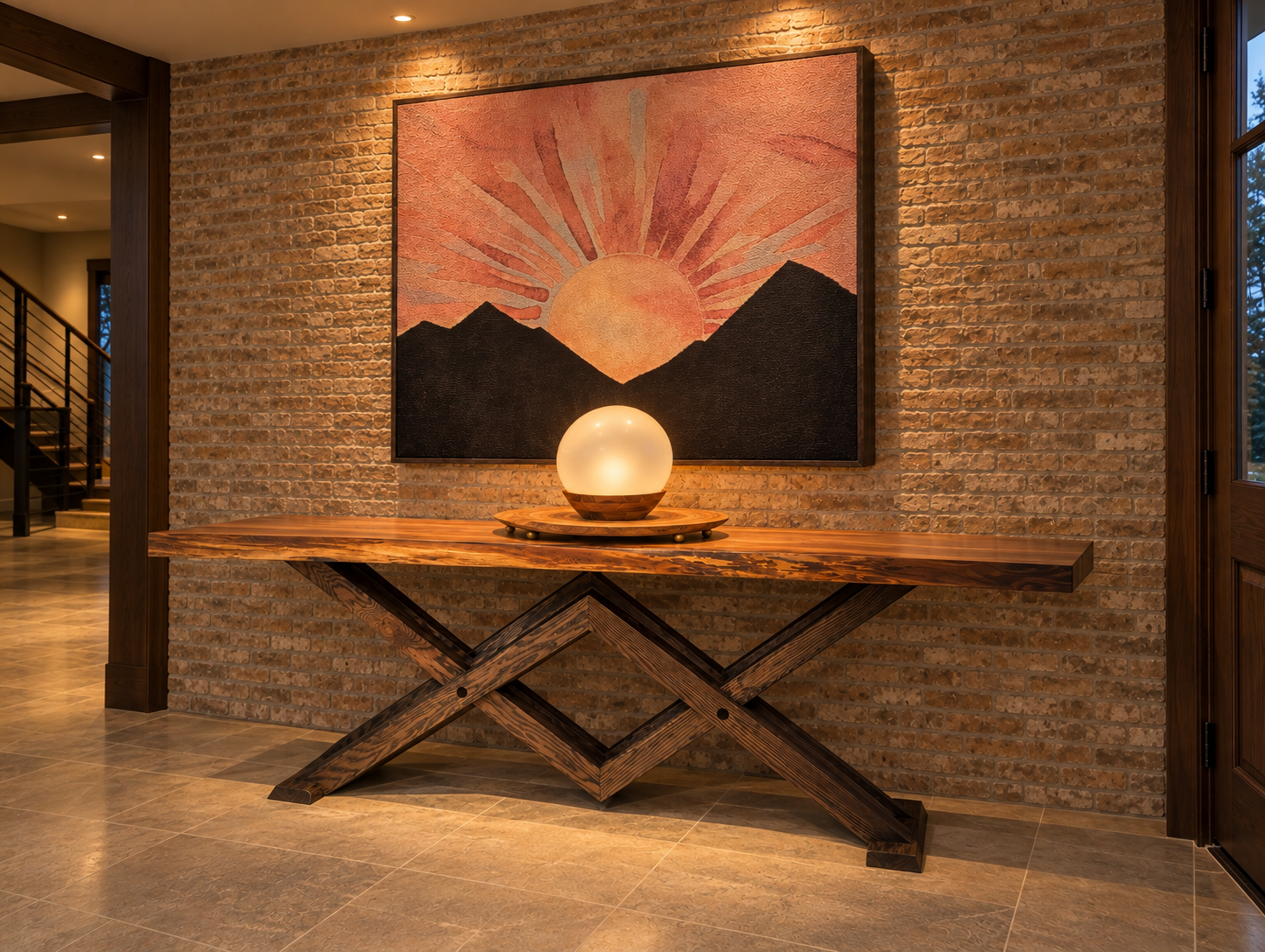
The Long Way Around

A seven-foot-two-inch refusal to arrive by the obvious route.

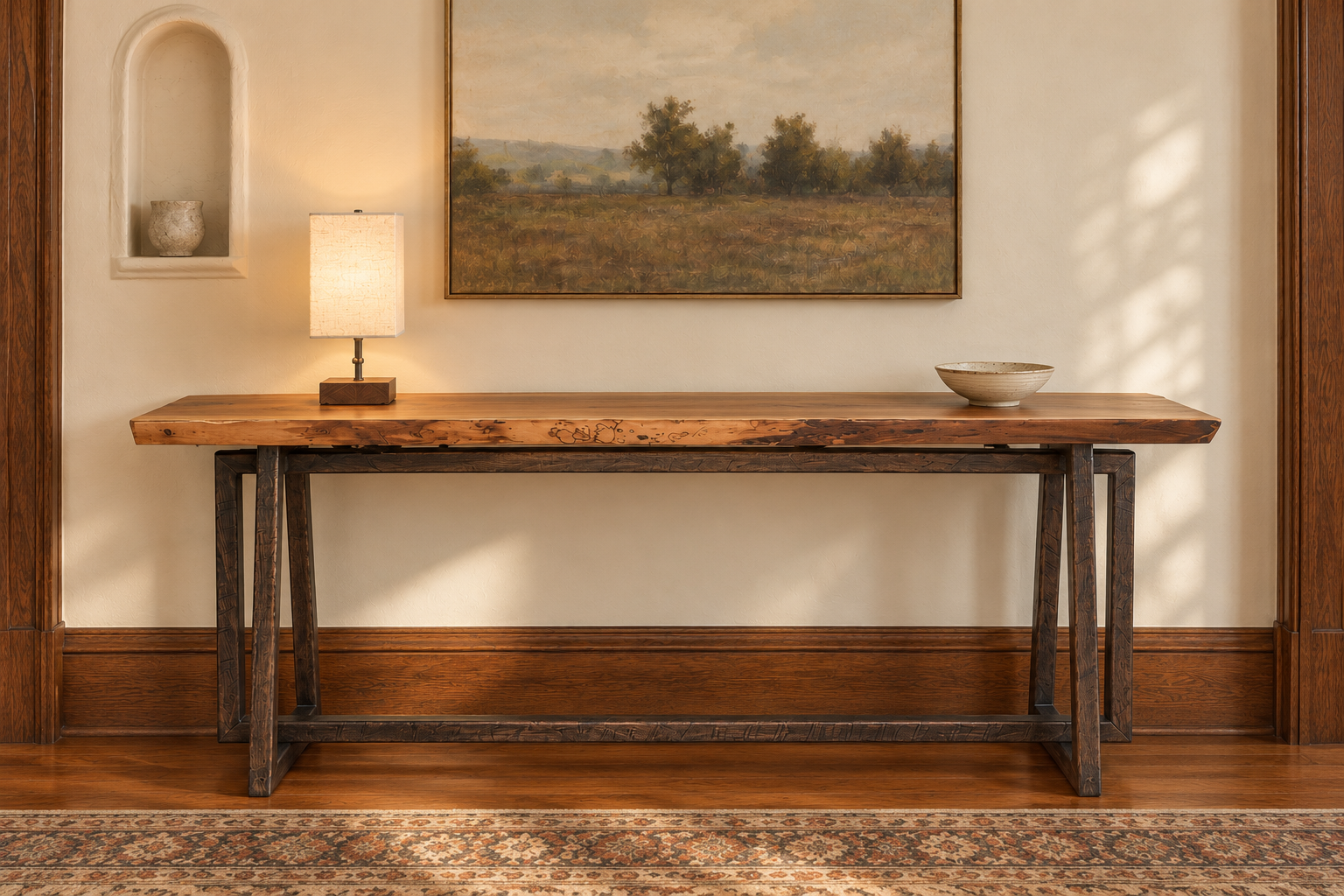
Lifestyle visualization of The Long Way Around in a Northern Michigan forest home

Lifestyle visualization · Original furniture shown

There was a shorter way to do this.

Several, in fact.

Four legs would have worked. Two trestles would have been perfectly respectable. A person could even have ordered something involving hairpins from the Internet and spent the remainder of the afternoon feeling productive.

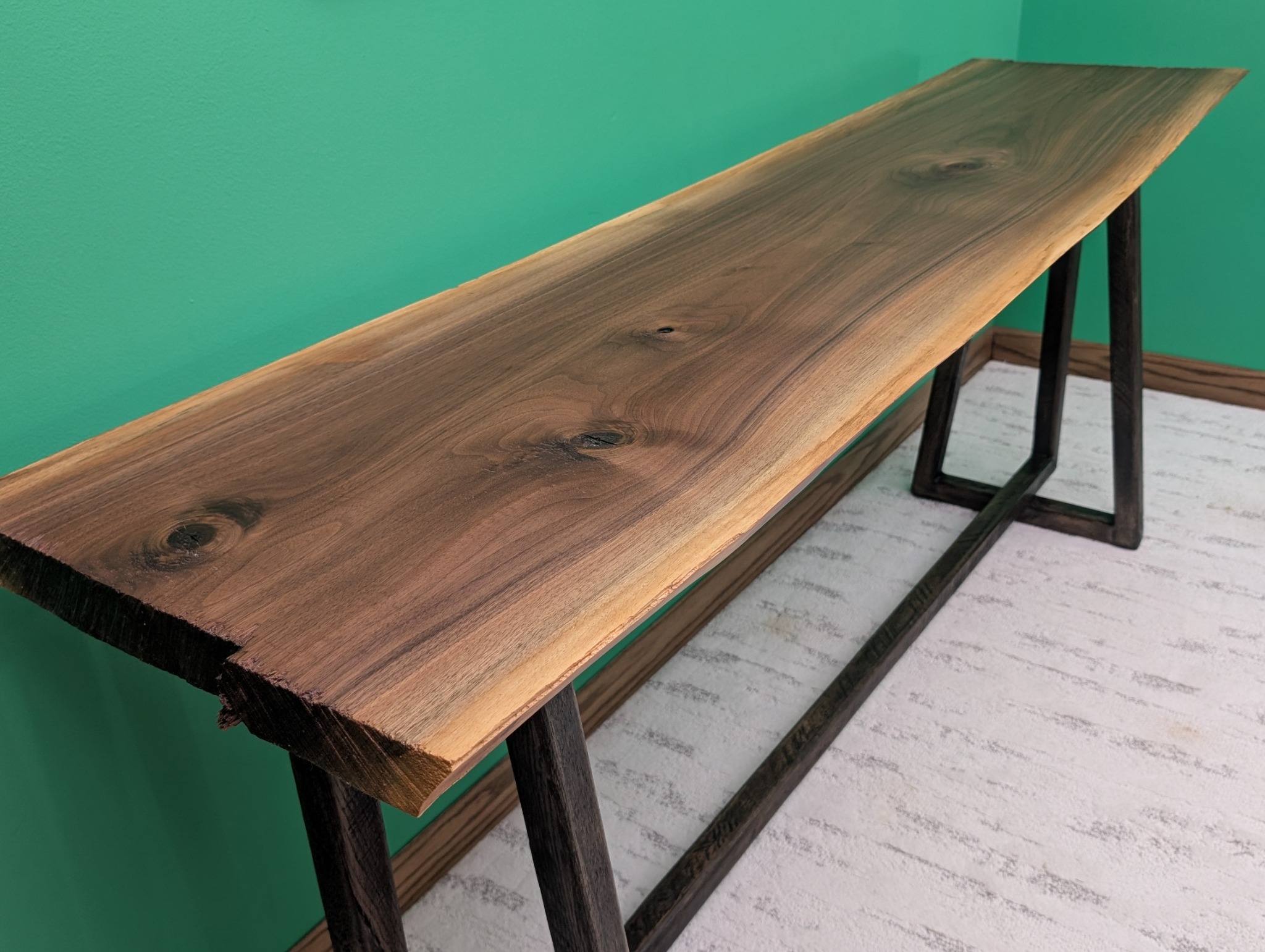
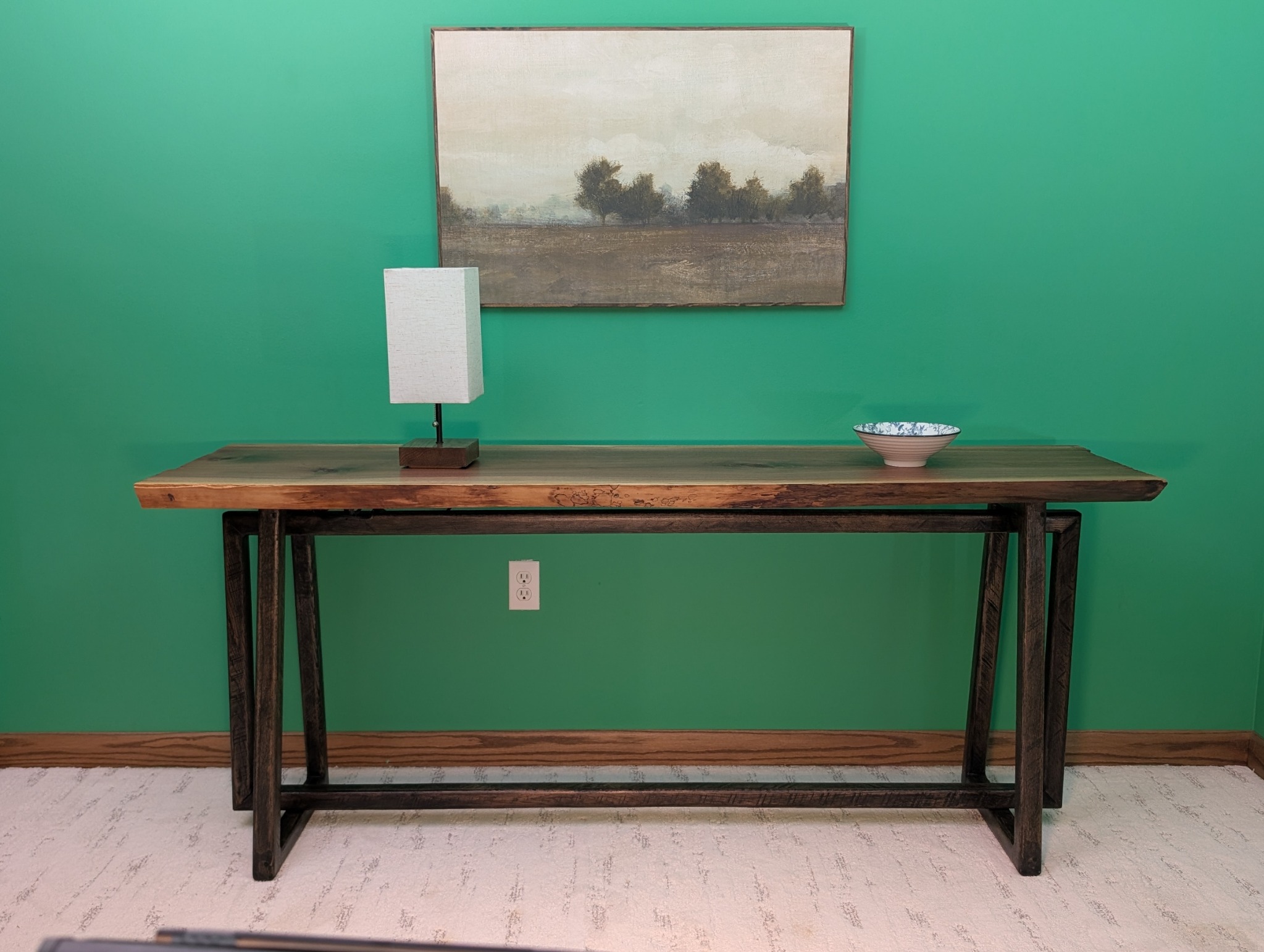
Instead, every line beneath this seven-foot-two-inch expanse of black walnut takes the long way around.

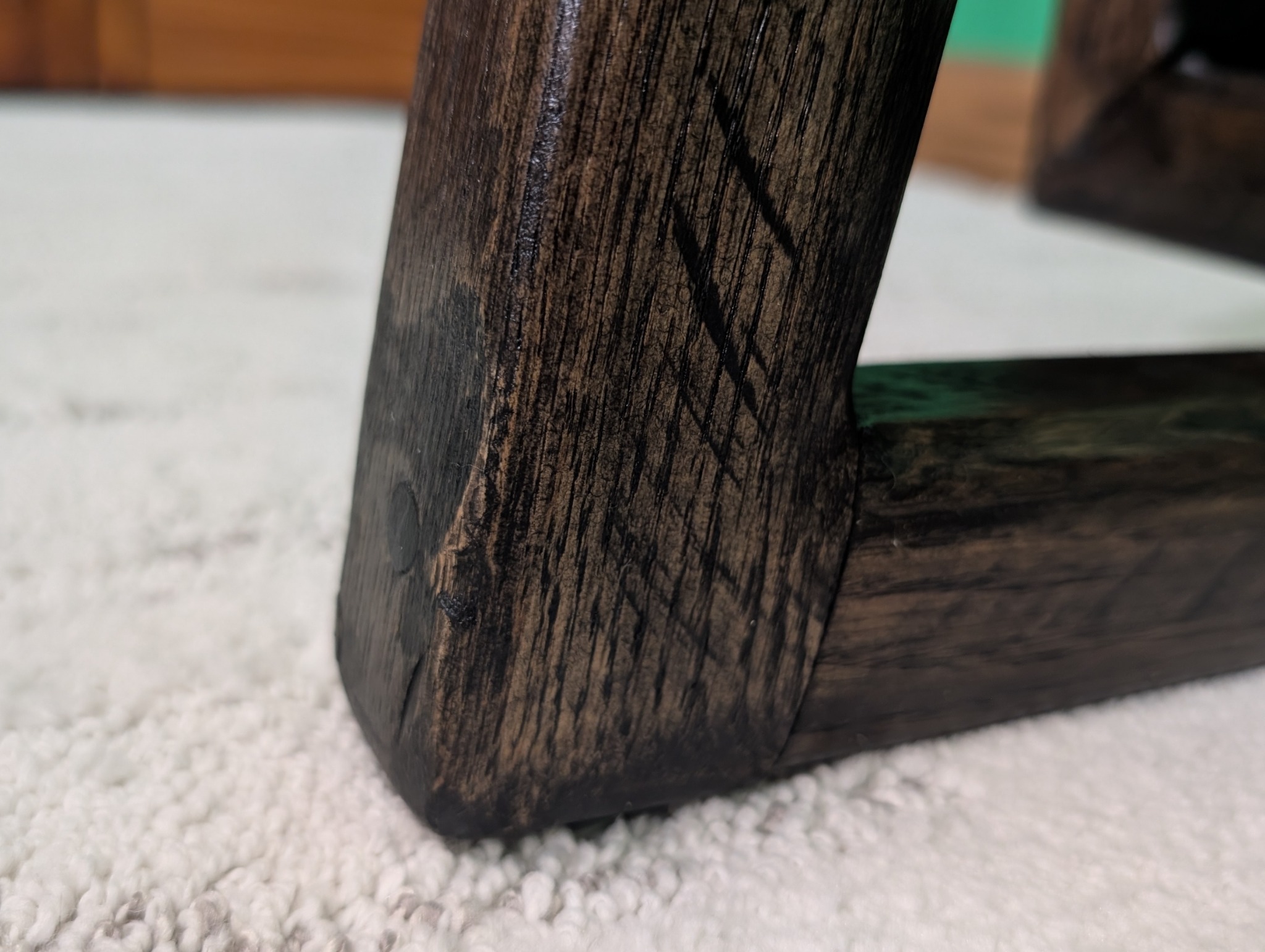
The oak frame descends, crosses, doubles back and meets itself again in a procession of interlocking geometry. It is structure performed as ceremony: a deliberately elaborate journey from floor to slab, because arriving was never the only point.

Above it, the walnut remains gloriously unconcerned with all that discipline. The grain wanders. The live edge rises and falls. Pale sapwood gives way to dark heartwood, and the entire broad surface appears to have been placed there as an offering.

The table had to be stood on end to enter the room in which it was photographed. This was not a defect in the doorway. It was the first practical demonstration of the title.

It is too large to apologize for itself and too composed to need to. Give it a long wall, air at either end, and something wholly unnecessary to hold.

The Boring Part

MaterialsLive-edge black walnut slab on an oak base
Dimensions86 in. long × 30½ in. tall × a little over 19 in. deep
Maximum depth20 in.
ConstructionInterlocking geometric oak frame assemblies with doweled joinery
DispositionMonumental, indirect and entirely aware of it
StatusOne of one · Available by inquiry

The shortest distance between two points was considered and found wanting.

Need the long way around somewhere else?

A piece can begin with a particular wall, room, slab, or unreasonable idea. Different dimensions and woods can be discussed. Special orders do not upset us.

Built to
discuss

The Cabinetmaker’s Disappointment

A long table for a room already containing enough polite furniture.

Lifestyle visualization of The Cabinetmaker’s Disappointment in a monumental log-and-stone room

Lifestyle visualization · Original furniture shown

There are men who encounter a rough board and immediately begin removing everything that proves it was once a tree.

They square the ends. Joint the edges. Plane away the saw marks. Fill the cracks. Sand until the wood has forgotten the forest entirely. Then they stand back, brush the dust from their aprons, and admire how efficiently they have converted nature into cabinetry.

This is not their table.

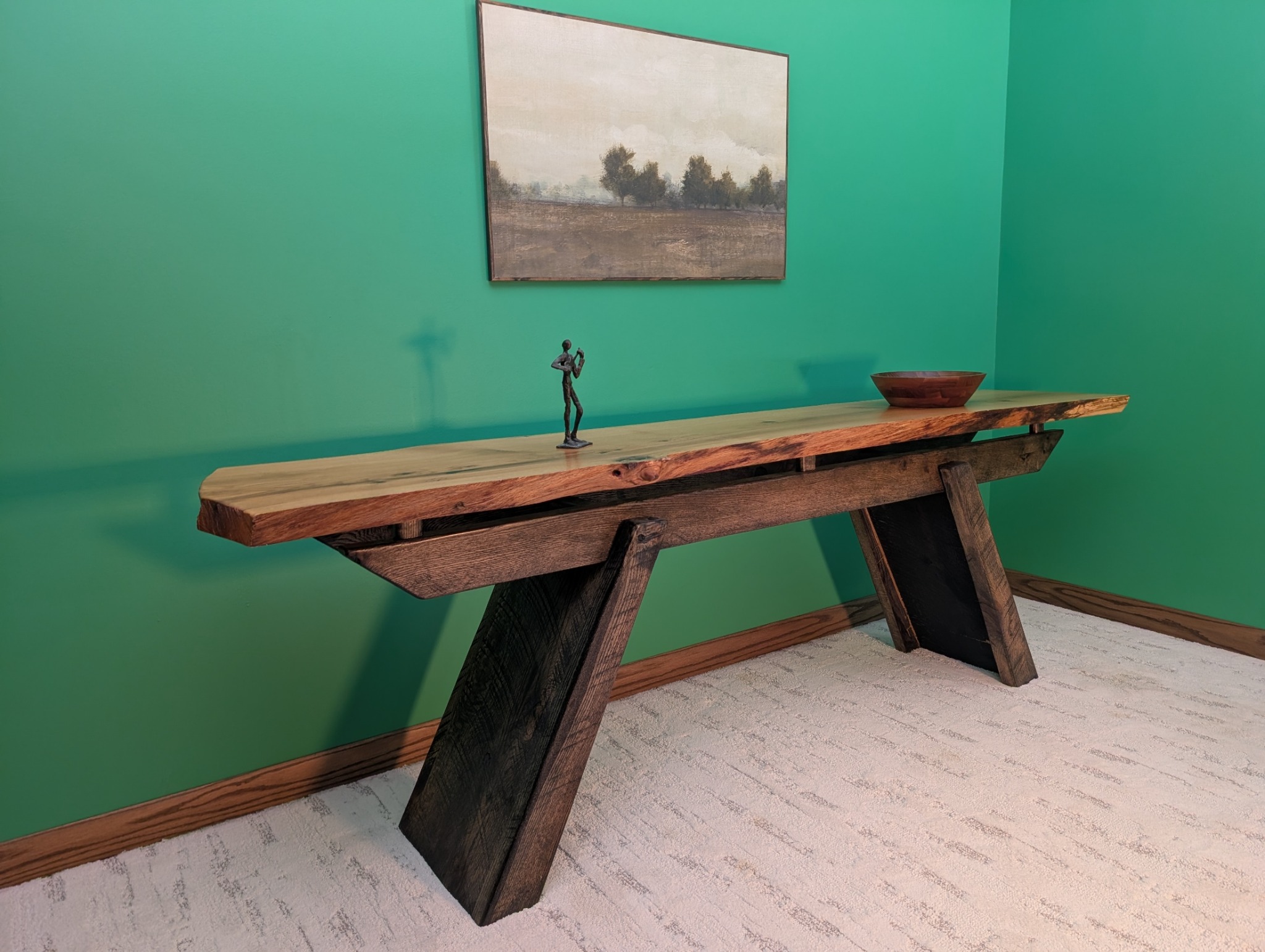
The slab retains its irregular edge, torn end grain, and the small indignities accumulated before it reached the workshop. It floats above a dark, rough-sawn structure whose angled uprights appear to have been designed by someone with strong opinions about gravity.

The Boring Part

MaterialsOak slab on an oak base
Dimensions7 ft. 3 in. long × 29 in. tall × approximately 15 in. deep
DispositionArchitectural, unapologetic, unexpectedly useful
Evidence keptLive edge, torn end grain, milling marks, knots and natural variation
StatusOne of one · Details and availability by inquiry

No Amazon hairpin legs were inconvenienced in the making of this table.

Like the idea, but not quite?

Different dimensions, wood, finish, or degree of strangeness can be discussed. These pieces are examples of what can be made. Special orders do not upset us.

Built to
discuss

The Long Argument

A civilized silhouette with the inconvenient facts left showing.

Lifestyle visualization of The Long Argument in an elegant room, viewed straight on

Lifestyle visualization · Original furniture shown

At first glance, it appears the negotiations went well. The top is flat. The stance is orderly. Four corners report for duty, and the entire affair can be trusted with a lamp.

Then the light catches the edge.

There is spalting there, drawn in black like a map of a country that no longer exists. The stretcher still carries the rhythm of the saw. At the ends, the board declines to conclude neatly. This is not neglect. It is testimony.

The structure provides discipline; the slab retains the last word.

The Boring Part

MaterialsBlack walnut slab on an oak base
Dimensions6 ft. long × 31 in. tall × approximately 19 in. deep
DispositionLong, lean and only superficially well-behaved
Evidence keptSpalting, ragged ends, tearout, saw marks and natural edge
StatusOne of one · Details and availability by inquiry

The milling marks remain visible because history need not be erased merely because sandpaper was available.

Special orders do not upset us.

See something you like, but need it shorter, stranger, darker, lighter, or built around a particular piece of wood? That is a conversation, not a problem.

One idea
many forms
Maker’s Original · Private Collection

The Half-Inch Rebellion

Built after discovering that fashionable furniture had developed a principled objection to fitting records.

Solid oak console staged with a lamp, books, pottery and candlesticks

It began with an innocent attempt to buy attractive furniture for a record player. Unfortunately, nearly every promising cabinet had been designed around imaginary possessions.

Shelves stopped just short of accommodating an LP. Receivers were apparently expected to breathe through prayer. Cables were treated as a moral failing. Why build a shelf eleven and three-quarter inches high when another half-inch would allow some perfectly reasonable eccentric to store his records?

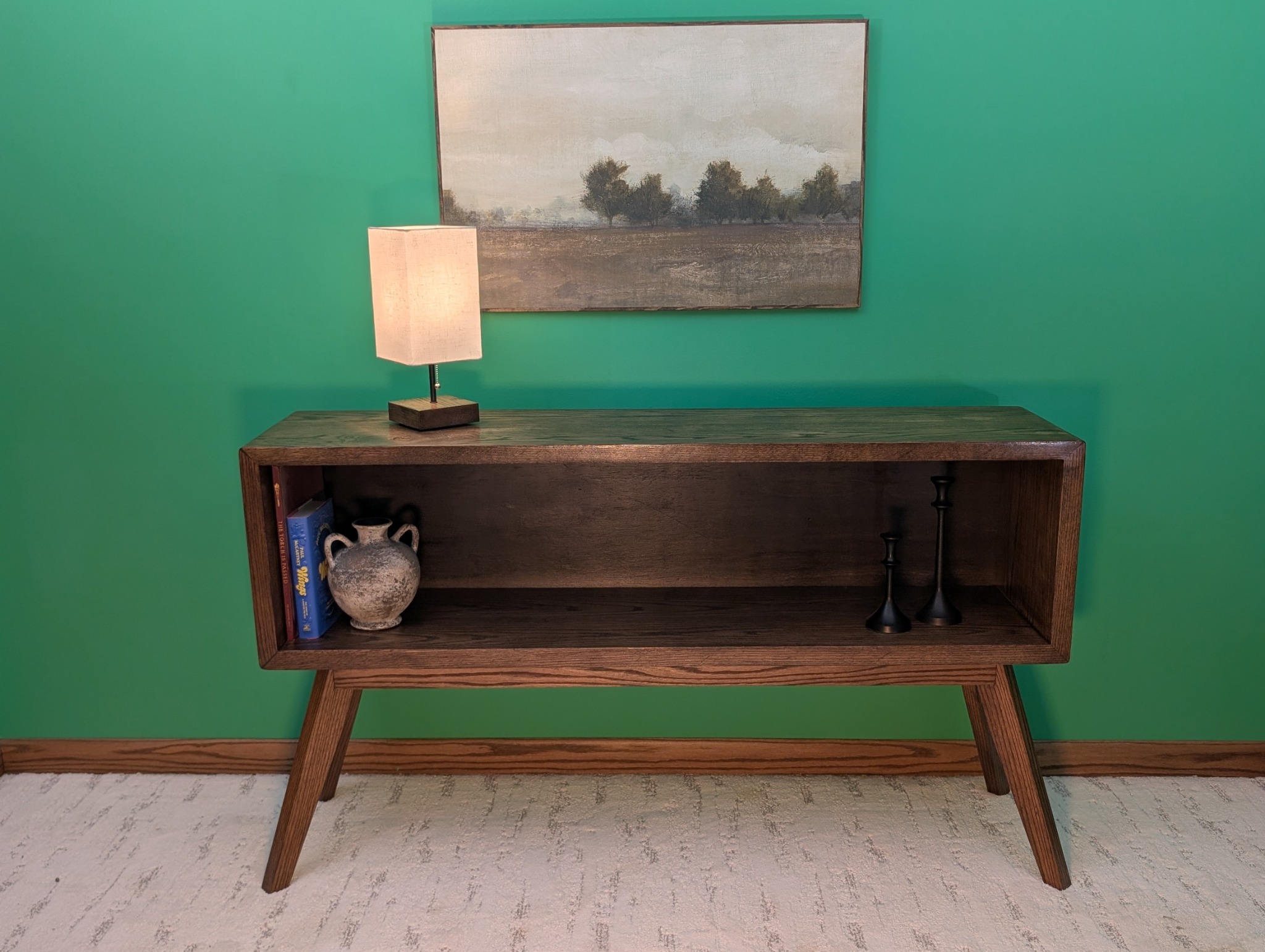
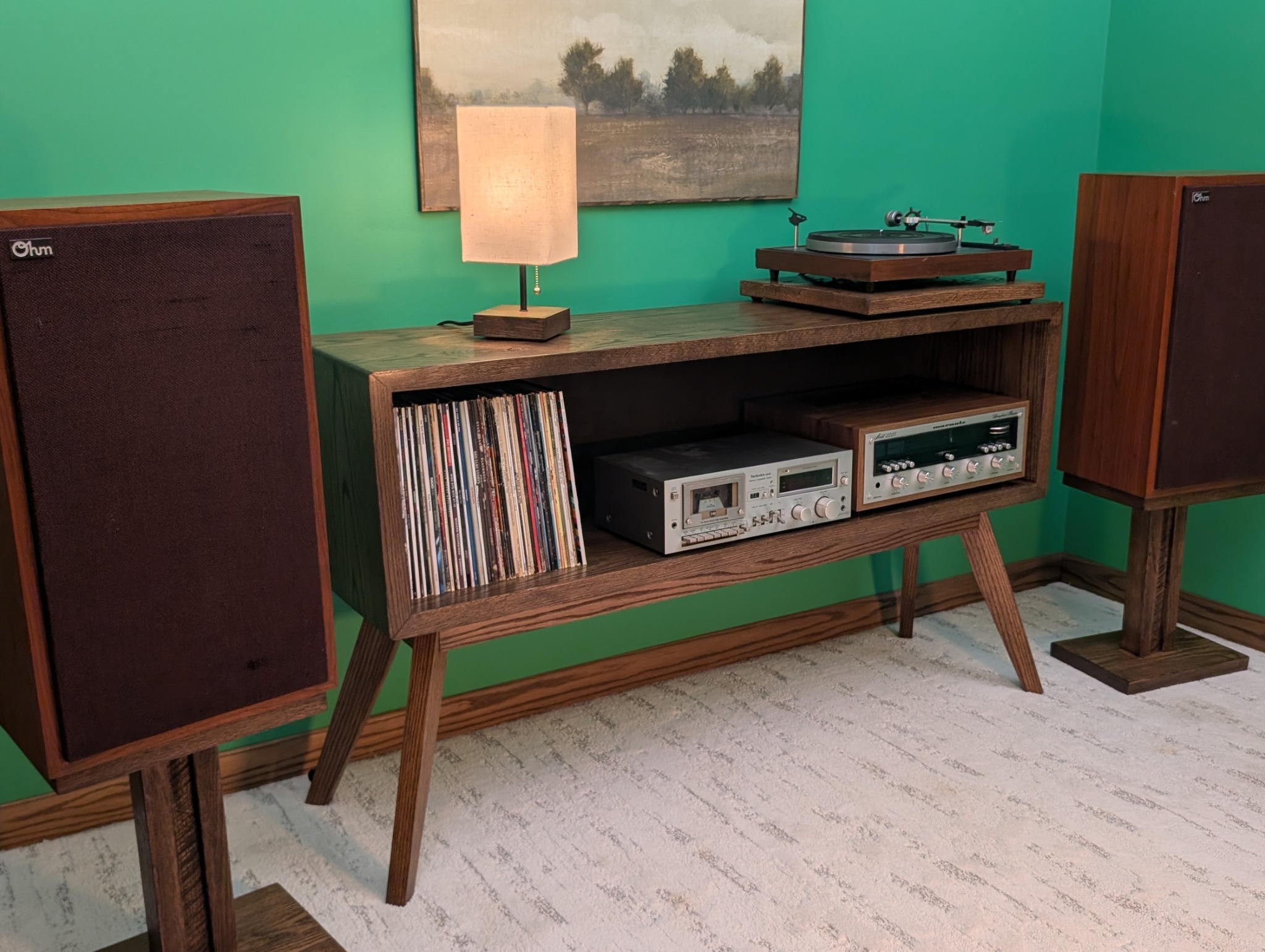
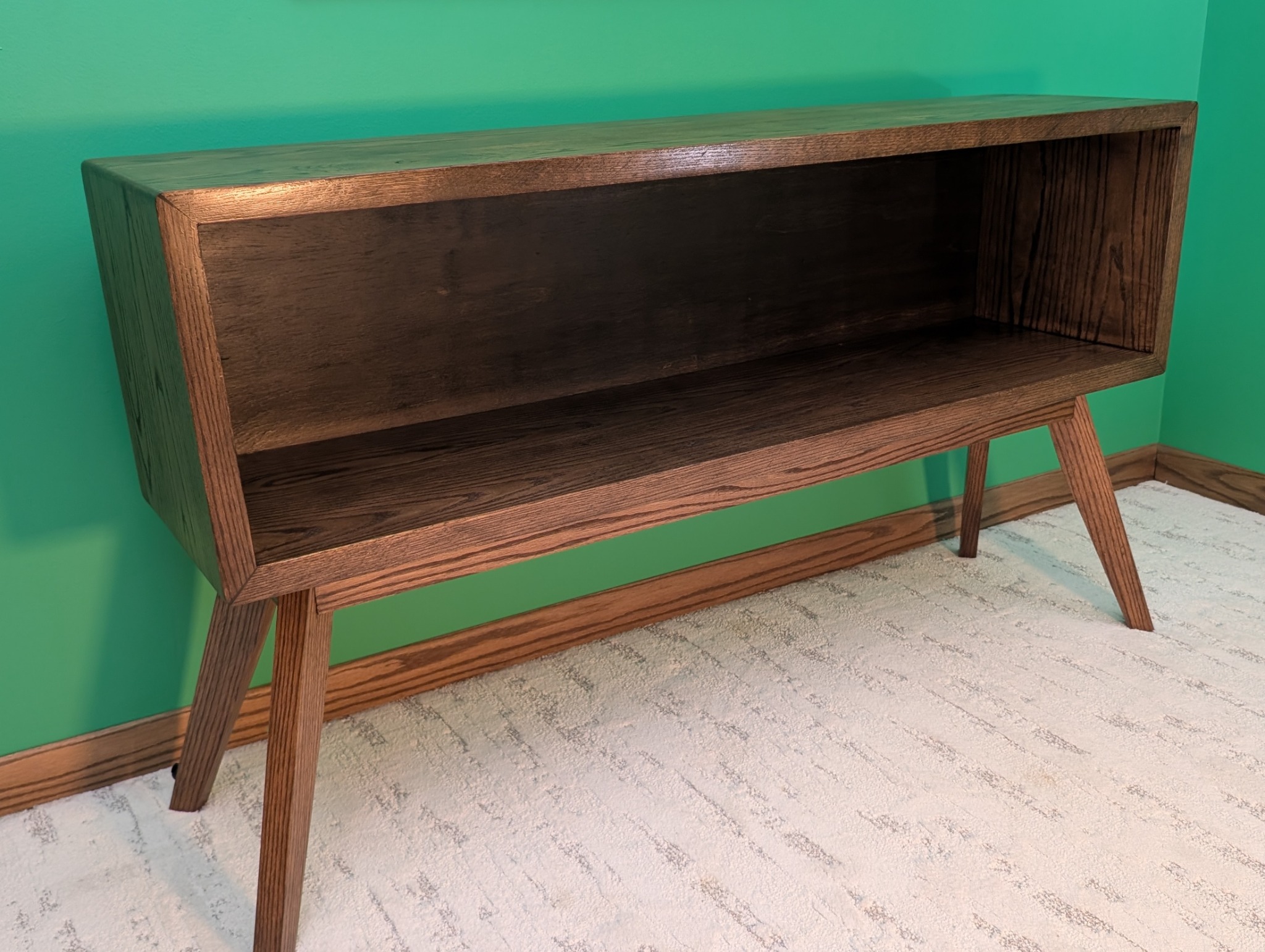
So the rough-sawn Amish oak was milled flat and square. The corners were mitered, the grain was matched, and the open cabinet was given the dimensions demanded by actual objects in an actual home. No metal legs arrived in a cardboard box. No hurried rows of angled screws were asked to impersonate joinery.

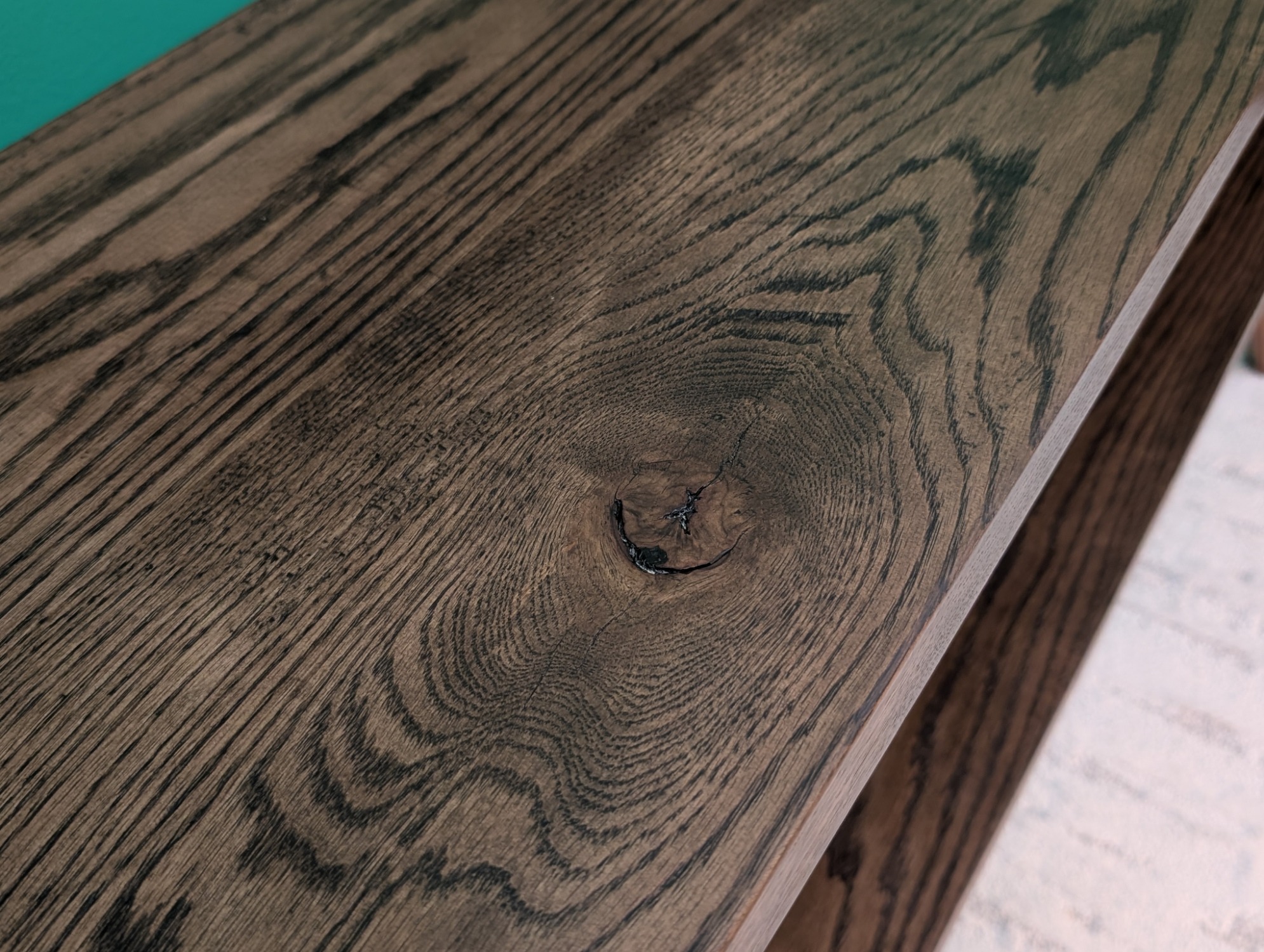
One board contained a knot that seemed, throughout construction, like an argument for choosing clearer lumber. Fortunately, better judgment did not prevail. Once finished, the supposed defect became the best part of the whole thing.

The Boring Part

MaterialsSolid oak, milled from rough-sawn Amish lumber
Dimensions59 in. wide × 34 in. tall × 15 in. deep
Interior13¾ in. high · Properly proportioned for LPs, books and full-sized audio components
ConstructionMatched grain, full mitered corners and a separate hardwood base with splayed legs
StatusRetained in the maker’s private collection · Sufficiently persuasive inquiries may be entertained

Designed for records, books, audio equipment and the unruly dimensions of actual life.

The original has been claimed.

This piece remains in the maker’s collection, though sufficiently persuasive inquiries may be entertained. Related consoles—and companion pieces—may be commissioned according to materials and workshop availability.

Private
collection
Maker’s Original · Private Collection

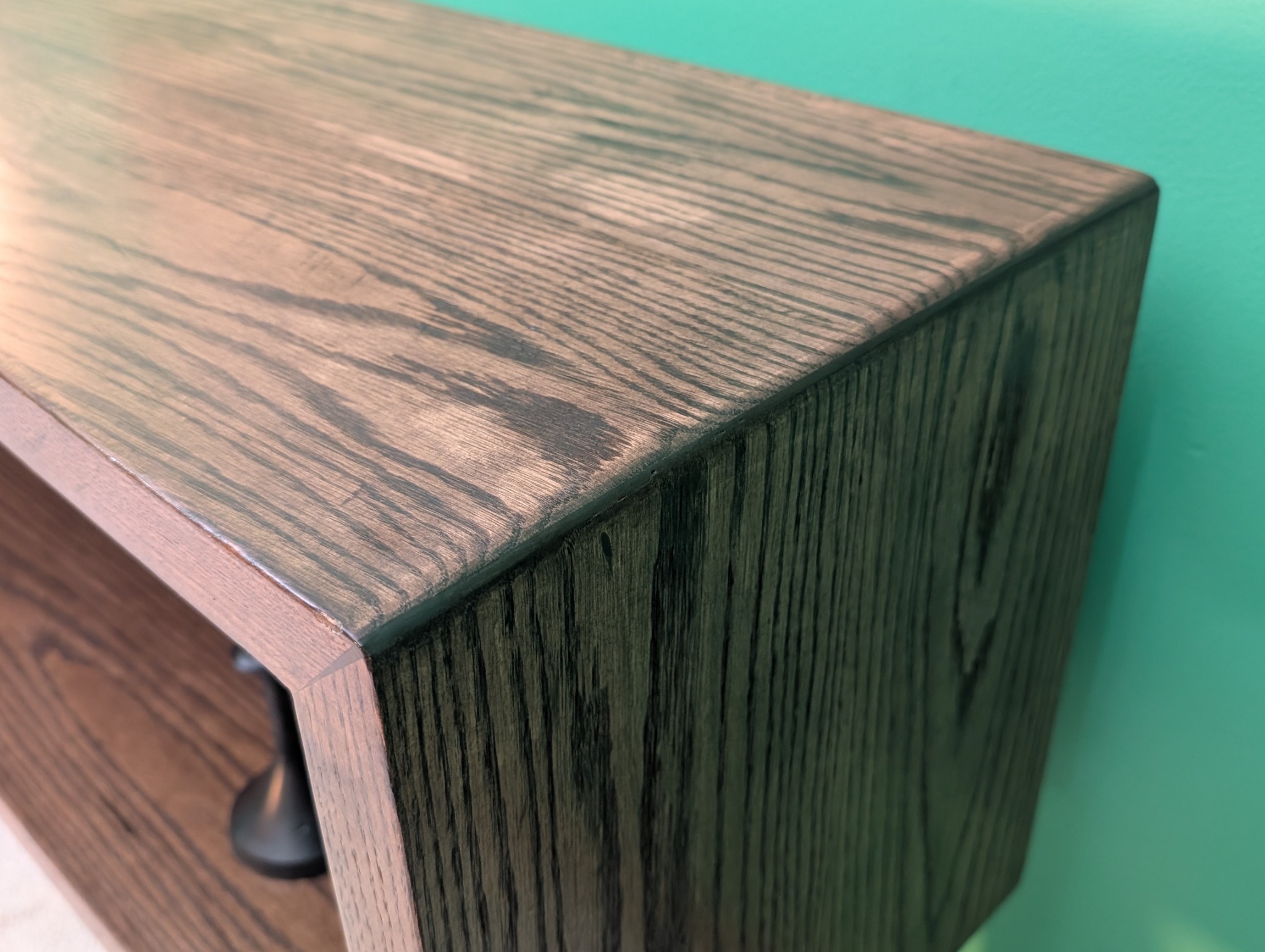
The Smaller Conspiracy

A companion to the larger console, but perfectly capable of operating without adult supervision.

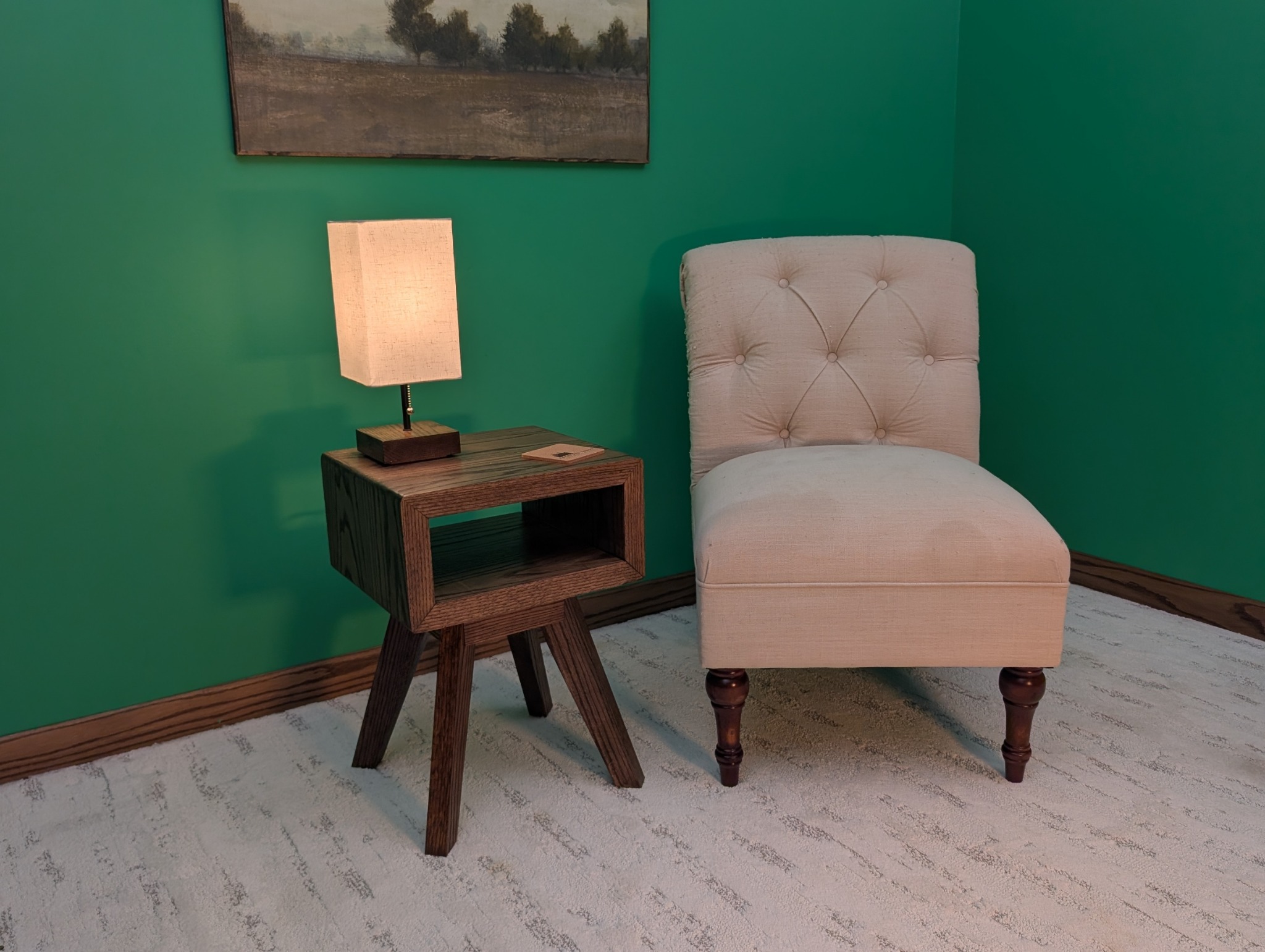
Oak chairside table with a lit lamp beside an upholstered reading chair

From across the room it appears innocent enough: a lamp, a chair, and a small oak table behaving itself.

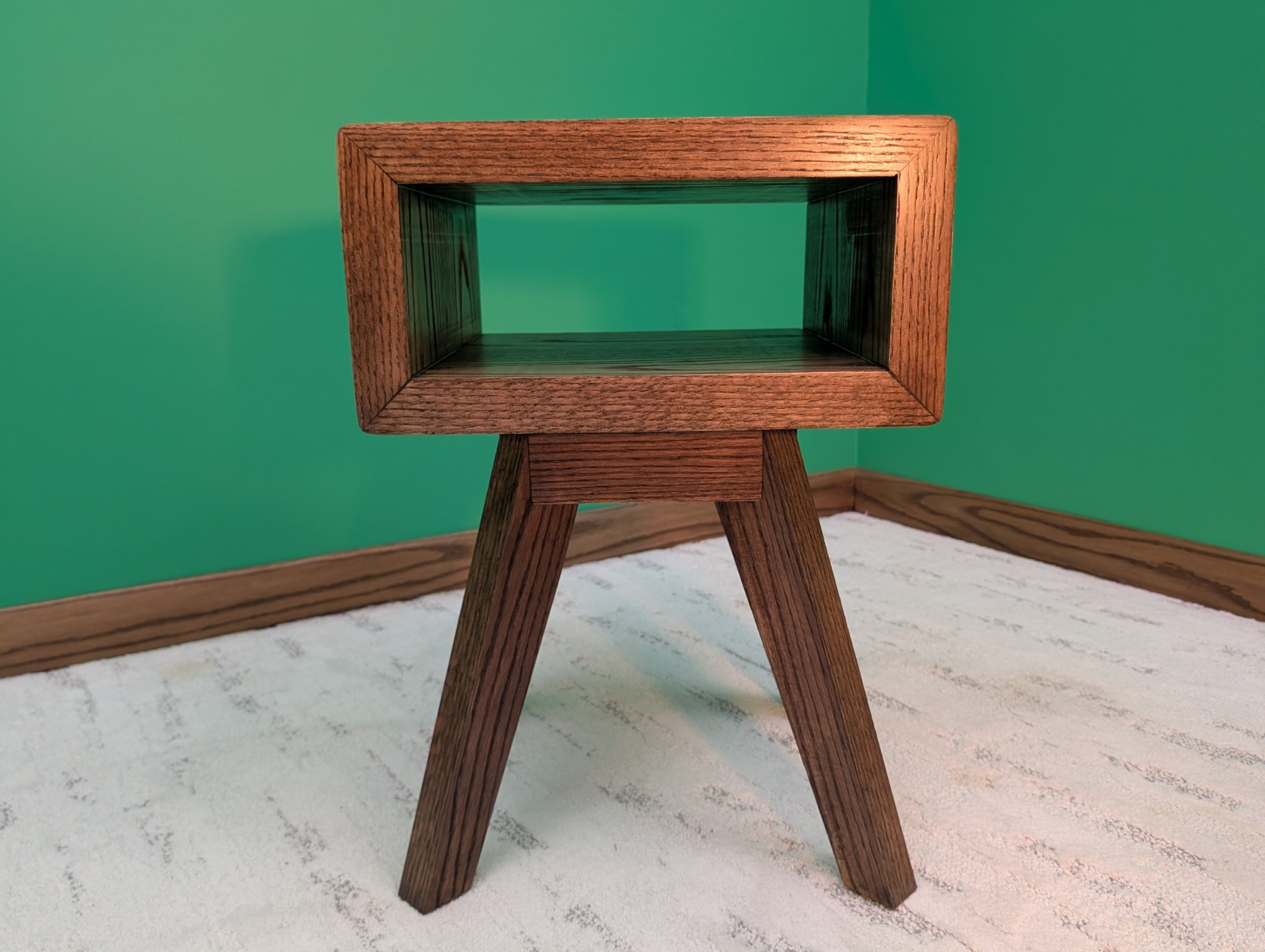
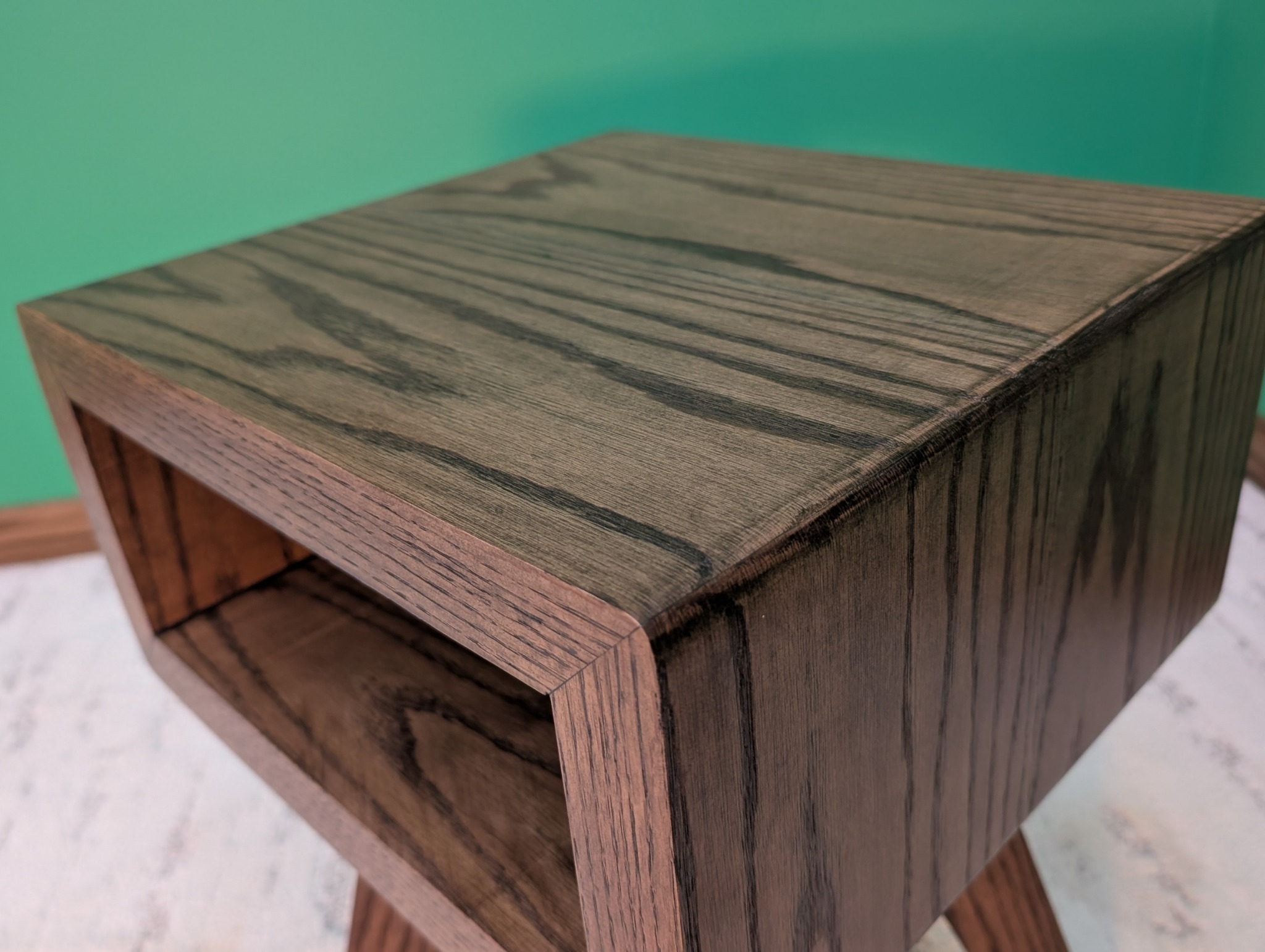
Closer inspection reveals that the little table has inherited all the larger console’s troublesome convictions. The box is fully mitered. The grain is allowed to travel around its corners. The splayed base was built for this particular cabinet rather than selected from the Internet during lunch.

Its open shelf will accept a book, spectacles, a remote control, or whatever small evidence of domestic life one prefers not to leave on the floor. At chairside height, the top keeps a drink within reach while maintaining plausible deniability about why one has not risen for several hours.

Small furniture is not simpler furniture. It merely concentrates the consequences of every decision into less space.

The Boring Part

MaterialsSolid oak, milled from rough-sawn Amish lumber
Dimensions16 in. wide × 22½ in. tall × 14¾ in. deep
InteriorOpen shelf just under 5 in. high
ConstructionFull mitered cabinet, matched grain and a fitted removable hardwood base
StatusRetained in the maker’s private collection · Sufficiently persuasive inquiries may be entertained

The part nobody sees is still properly made. Respectable furniture should remain respectable even while standing on its head.

One is a table. Several become a plot.

A companion console, additional chairside tables and a coordinating coffee table may be commissioned individually or as a complete suite.

Part of the
conspiracy
Available by inquiry

The Unnecessary Altar

A wholly unnecessary, completely indulgent and remarkably dignified place to set your car keys.

Lifestyle visualization of The Unnecessary Altar in a high-ceiling Northern Michigan entry

Lifestyle visualization · Original furniture shown

Nobody needed this. That must be established immediately.

Nobody required seven feet and nine inches of ancient-looking timber, complete with a ragged natural edge and an end that appears to have survived a minor geological event, raised upon a single monumental pedestal with all the solemnity of a provincial shrine.

A small table would have held the keys.

But the keys have had a difficult day. They have started the automobile, opened the workshop, and endured several hours in the company of loose change. Perhaps they deserve to be presented to the household upon something approaching an altar.

The pedestal does not merely support the slab. It offers it. Quietly. Ceremonially. With the unmistakable implication that someone should dim the lights and begin speaking Latin.

This is an unapologetically large object. It does not belong squeezed into an alcove, wedged between two chairs, or asked to apologize for blocking a thermostat. It requires open space at either end and a room with enough confidence to leave it alone.

Place it in a substantial entrance hall. Behind an immense sofa. Along the wall of a lodge, gallery, restaurant, or hotel lobby. Set one beautiful object upon it—or nothing at all.

Car keys are acceptable.

Clutter is blasphemy.

The Boring Part

MaterialsLive-edge oak slab on a monumental oak pedestal
Dimensions93 in. long × 30 in. tall × approximately 25 in. average depth
Maximum depth28 in. at its deepest point
PlacementRequires generous space and visible air at both ends
StatusAvailable by inquiry

Nearly eight feet of timber and architectural ceremony, devoted to the dignified reception of whatever you happen to have in your pockets.

The room must rise to the occasion.

This piece is an example of what can be made. Related work may be commissioned for a particular room, purpose, species of wood, or degree of architectural excess. Special orders do not upset us.

Built without
apology
Commissions & availability

Discuss a commission.

Have a particular piece in mind—or merely the beginning of an unreasonable idea? Tell me what you need, where it needs to live, and approximately how large it ought to be.

Furniture maker Bob Shannon outdoors in Northern Michigan
About the maker

The Au Sable Character

Northern Michigan has long attracted independent makers, musicians, mechanics, artists, and assorted eccentrics.

Their curiosity, self-reliance, and willingness to ask Why not? helped shape both the Au Sable Valley Collection and the person building it.

Read The Au Sable Character